Saturday, 13 December 2014

Noah's Arrrrrgh, or, A Silly Little Story


This is the ark that Noah built.

Image from a site too insane to link to


This is the god which ordered the construction of the ark that Noah built.

god

This is the Flood that swamped the earth, at the whim of the god which ordered the construction of the ark that Noah built.*

Image taken from another site too batshit insane to link to.


These are the animals that Noah loaded on the ark, to save them from the Flood that swamped the earth, at the whim of the god which ordered the construction of the ark that Noah built.

Another loonie site. Obviously.

This is the male termite that came along with the animals that Noah loaded on the ark, to save them from the Flood that swamped the earth, at the whim of the god which ordered the construction of the ark that Noah built.

[Source]

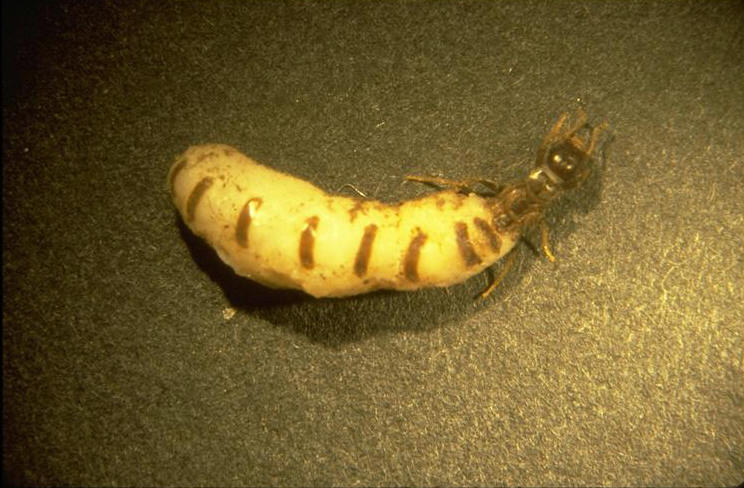
This is the queen termite who married the male termite that came along with the animals that Noah loaded on the ark, to save them from the Flood that swamped the earth, at the whim of the god which ordered the construction of the ark that Noah built.

[Source]


These are the children of the queen termite who married the male termite that came along with the animals that Noah loaded on the ark, to save them from the Flood that swamped the earth, at the whim of the god which ordered the construction of the ark that Noah built.

[Source]

These are the bacteria in the intestines of the children of the queen termite who married the male termite that came along with the animals that Noah loaded on the ark, to save them from the Flood that swamped the earth, at the whim of the god which ordered the construction of the ark that Noah built.**

[Source]

This is the wood eaten to be digested by the bacteria in the intestines of the children of the queen termite who married the male termite that came along with the animals that Noah loaded on the ark, to save them from the Flood that swamped the earth, at the whim of the god which ordered the construction of the ark that Noah built.

If you really want to buy it


These are the holes left by the wood eaten to be digested by the bacteria in the intestines of the children of the queen termite who married the male termite that came along with the animals that Noah loaded on the ark, to save them from the Flood that swamped the earth, at the whim of the god which ordered the construction of the ark that Noah built.

Holes in argument


This is the water let in through the holes left by the wood eaten to be digested by the bacteria in the intestines of the children of the queen termite who married the male termite that came along with the animals that Noah loaded on the ark, to save them from the Flood that swamped the earth, at the whim of the god which ordered the construction of the ark that Noah built.

From a site even more lunatic than the others. Take it from me.


This is the sinking caused by the water let in through the holes left by the wood eaten to be digested by the bacteria in the intestines of the children of the queen termite who married the male termite that came along with the animals that Noah loaded on the ark, to save them from the Flood that swamped the earth, at the whim of the god which ordered the construction of the ark that Noah built.

[Source]

This is the wreckage left after the sinking caused by the water let in through the holes left by the wood eaten to be digested by the bacteria in the intestines of the children of the queen termite who married the male termite that came along with the animals that Noah loaded on the ark, to save them from the Flood that swamped the earth, at the whim of the god which ordered the construction of the ark that Noah built.

[Source]

...and they all lived extinctly ever after. Or, you know, didn't.


[* and incidentally drowned all the innocent non-rescued animals and babies too, not to mention the plants and the aquatic animals which couldn't live in the admixture of fresh and sea water. Ain't it so loving?

** shouldn't there be only two bacteria? I think there should.]

A little lecture on Maoism and Asia

Let me tell you something about Communist rebellions in Asia.


From Nepal to the Philippines, India to Sri Lanka, Indo-China to Myanmar to Malaysia, Asia has seen plenty of Communist insurgencies. Some have been ended, in victory or defeat or a compromise settlement. Some, particularly in India and the Philippines, are still ongoing. Some more will undoubtedly arise in future.

Communist Party of India (Maoist) troops

Obviously, for such a huge and diverse continent, said Communist insurgencies have been varied and heterogeneous, but they have had one salient feature in common.

Almost all of them, and all the successful ones, have been Maoist in their inspiration, not classical Marxist. And by that I mean that the fighters are drawn from the agricultural working class, the peasants, not the “urban proletariat” – the factory workers and unions.

Is this significant? It is. Very.

In fact, without Mao there would never have been a People’s Republic of China, and no Viet Minh revolution in Vietnam. The whole face of Asia would have been significantly different.

So what is it with Asian leftist revolutionaries revere Mao?


Simple.


In classical Marxist theory, the peasantry is considered far too ignorant and reactionary to rise in revolution. That role is left to the industrial workers, the urban proletariat. Well, that was possibly true enough in the situation prevailing in 19th century Europe, but things are completely different in Asia. (As they were in Russia a hundred years ago, when that country was much more an Asian than a European nation.)


In Asia, the agricultural working class - the farmers and peasants - were, and still are, so exploited, so sunk in poverty, so excluded from the system, that an industrial job, even at slave wages, is the equivalent of paradise to them. They're preyed on by moneylenders, tax collectors, landlords, and suppliers of equipment; they're never out of debt, their land is always on the verge of being seized by rapacious corporations with the backing of the government, and they literally have to survive from day to day. For example, in India, literally every day, today, farmers commit suicide by drinking pesticide, unable to bear the burden of debts. Others have their farms seized by the government for “developmental” projects which usually involve mining concerns or factories. And tribal villagers have it even worse, since they typically have no land records and can’t prove any ownership at all. 


The industrial worker on the other hand has at least an assured salary and enough food and water to get by, and has literally everything to lose by rebelling. It's against his interests to participate even in high risk union activity let alone rebel with force of arms. If the factories close down, what will he eat? And if he’s a contract worker, what does he do if the contract is terminated? The last thing he can afford to do is to rock the boat.  


So in Asia the natural revolutionary class is the peasantry, not the workers. And it took Mao to realise this . Pre-Mao Chinese Communist Party attempts at revolutionary action, using the urban workers, were disastrous. Not that Mao had an easy time getting his “radical” theories accepted by the rest of the party, even so.


Mao on the Long March

(Not that Mao was quite the first to appeal to the peasants. Lenin, too, had based the Russian Revolution on both the workers and the peasants. But the Red Army was in any case largely a peasant force, and unlike Mao, who concentrated exclusively on the peasantry, Lenin tried a dual approach.)


To make it clear: Mao harnessed China's millennia-long history of peasant uprisings to his revision of Marxist theory, and that is the reason he won the civil war. That is why even the defeated Guomindang troops joined the People’s Liberation Army in fully organised units, and that is why the People's Republic of China exists today. 


(This is not the place to argue whether that is a good or bad thing, or whether today's China is at all Maoist. I'm talking about the
 reasons.)


And it’s because the People’s Republic exists that other Marxist revolutions in Asia could ever be launched at all.


That's why all Communist uprisings in Asia have been Maoist. Because Mao got it right. 

Jesus Christ's Younger Brother: Hong Xiuquan and the Taiping Rebellion

Last night I had a most interesting dream. A lot of my dreams are interesting, one way or another, but this was memorable for reasons which have nothing to do with those involving being naked in public or being faced with exams which I’m unprepared for.

I saw India, in a parallel present, split into several nations; the north eastern and eastern states had split away, as had Kashmir in the far north and Punjab in the north west. But the rest of the country – the South and Central Indian peninsula and the rest of North India – was a Christian dictatorship.

The approximate area of Christian India. Yes, I dreamt of the map as well.


A Christian dictatorship, yes, where Jesus Christ was a Hindu god, an officially declared avatar of the god Vishnu, and whose worship was declared compulsory across the length and breadth of rump India. No other gods, not even other Vishnu avatars, or religions were allowed. So this was a kind of Hindu Christianity with religious police thrown in.

The idea isn’t really as absurd as it might appear at first sight. Hinduism is a religion which has historically absorbed other faiths like a sponge. If Indian Muslims and Christians hadn’t taken care to isolate themselves religiously from the beginning, I can assure you that Christ and Muhammad would have been minor deities in the Hindu pantheon today, rather like Buddha or the founder of Jainism, Vardhamana Mahavira, are. And Christ, of course, is tailor-made for the role of avatar, seeing as he’s the son of god, born of a virgin, etc etc, just like Krishna, the most famous of Vishnu’s official avatars.

This really brought to my mind a little bit of history which, amazingly, almost nobody knows – that China in the 1850s came very, very close to becoming a puritanical Christian dictatorship under a messianic self-styled emperor who proclaimed himself to be the younger brother of Jesus Christ.

What?

No, I’m not joking.

Hong Xiuquan was a member of the Hakka ethnic group who wanted to become a Mandarin. So he took the civil service exams, which only a tiny minority of candidates passed, and not too surprisingly failed...again and again and again. Instead of concluding that he’d be better off at some other line of work, after his fifth failure he took to his bed and had some kind of brainstorm. Afterwards he read a pamphlet given him by a missionary, and said it had been revealed to him that he was the younger brother of Jesus himself.

Picture from Wikipedia


Since Jesus’ younger brother couldn’t go through life as a small time teacher, which was Hong’s line of employment at the time, he gathered together an army of disaffected peasants. As to why they’d want to flock to the colours of someone who was demonstrably unstable, at that time things were not going particularly well for China. The decaying Manchu Qing dynasty in Beijing had been forced to make more and more concessions to the Western barbarians, trade had suffered, the Hakka had little land, there was unrest in the provinces, and China has a long history of peasant rebellions anyway (that’s what the Maoist Revolution was, too, a peasant rebellion, completely different from the basically urban and military Russian Revolution). Hong was apparently charismatic enough to get the peasants to gather around, whereupon he preached a bizarre mix of Christianity, religious intolerance, anti-Manchu rhetoric, Puritanism, and hardcore Communism. His men then stopped tying their hair in pigtails, as was de rigeur for non-Manchus at the time, and set off northwards to conquer China.  

It was called the Taiping Rebellion, and it was one of the most destructive civil wars in history. By the time it was over, some twenty million people were dead, and China so badly weakened that the empire never recovered from it.

At first Hong’s forces made good progress, and took the old capital of China, Nanjing. There was panic in Beijing, the Emperor fled, and if Hong had followed up his advance he would almost certainly have taken the city. Instead, he shut himself up in his palace in Nanjing and began rule by religious decree, while his four main generals (known as “kings”) schemed against each other and looted the countryside to feed their troops.

By 1856, Hong was insane enough and paranoid enough to decide his “kings” were plotting against him, and began killing them or forcing them to secede from the main rebellion in self-preservation. The British and French, who might have been sympathetic to Hong (given his Christianity) also failed to secure trade pacts with him and realised he was far too mentally disturbed ever to win the war. So they, too, switched sides to the Imperials, who had recovered their nerve under fresh commanders, and even sent some officers and troops to aid in the reconquest.

Illustration showing British troops and Taiping in combat.

 But in any case by this time the Taipings were collapsing under counterattack by the Imperial armies and infighting, so the Western aid was at best incidental. After an attempt to take Shanghai failed in 1860, the Taipings collapsed in slow motion. Nanjing was recaptured in 1864, days after Hong Xiuquan died of food poisoning. A few months earlier, he’d abdicated in favour of his son, who was all of fifteen at the time. By 1870 the last vestiges of the rebellion, which by then had fragmented into bandit gangs and allied mini-rebellions, had been stamped out.

It’s interesting to speculate what might have happened if the Taipings had won. For sure, the China they’d have created would have been a far cry from the last years of the Qing dynasty. It would have been highly centralised, Christianised, and intolerant of any form of dissent. Its economic policies, which had initially been Communist, had by the mid-1850s been abandoned in favour of trying to co-opt the middle class, so we’d probably have had a capitalist-friendly environment paying lip-service to Hong’s original ideas. Rather like today’s China, come to think of it, in that respect.

What would have been the biggest change would have been the fact that under the Taipings it’s most unlikely that there would have ever been a 1911 style republican revolution, let alone a Maoist revolution in 1948. Instead, the Western countries would probably have made an alliance of convenience on the basis of shared “Christian values” and co-opted China. I’d venture to predict that in that case China today would have been very similar to the Philippines, nominally independent but an economic and political colony of the West in all but name.

That evident fact didn’t stop both Sun Yat Sen and Mao Zedong from hailing the Taipings as glorious revolutionaries against a corrupt feudal regime, though. Certainly the Manchus were corrupt and feudal to the core, and by the 1850s were sliding down the slope to extinction. The Taipings gave them the final push and set the stage for the creation of modern China.

Jesus Christ’s younger brother merely killed twenty million and destroyed half the country to do it.

Further reading: