Back when I was a kid, aeons ago, there was
a series of comics books called the Amar Chitra Katha, which had, as one of
their self-proclaimed goals, educating Indian kids about “spirituality” and a
(highly fictionalised, not to say mythologised) version of history.
Well, in one of the stories I recall from
those days, there was this Hindu Brahmin monk who thought he was very spiritual
and pure. He never, he said, harmed a living thing, nor did he ever pollute
himself with meat. Now he wanted to learn even higher spirituality from the
most knowledgeable in the land, and he set out on a journey to find such a
teacher.
In the course of his wanderings, he was
told by someone to go to a certain village and ask for a certain person. Sure
that he was about to meet a great and revered teacher, the monk set out
excitedly for the village, and once he arrived
there, he asked to meet the great teacher by that name.
The people he asked were nonplussed. “We
know of only one person of that name,” they said. “But he isn’t a teacher of
any sort. You’ll find him in that shop over there.”
The monk looked at the shop, and recoiled.
It was a butcher’s.
Seething with anger, he stormed forward and
began upbraiding the butcher for his evil and cruel profession. The butcher, who’d
been expecting him, calmly informed him that he earned his own and his family’s
living by the profession, and that he didn’t see anything objectionable or
shameful in it.
Then he launched an attack on the monk’s
own pretensions to venerating life. “Every day, as you walk,” he said, “beneath
your feet, you crush thousands of animals which have done you no harm. Don’t
you think you’re in no position to accuse others of cruelty?”
To make a long and predictable story short,
the monk left, as they say, a sadder and a wiser man, with the knowledge that
one doesn’t necessarily have to be a sanctimonious prig in order to be “good”.
I remembered this, basically, because it
was so out of character for Amar Chitra
Katha, which routinely passed off myth as fact and gave everything it could
a Hindu twist. I also remember it because it was one of the very few mainstream
examples of vegetarian hypocrisy getting roasted that I could find.
Yes, I do mean “vegetarian hypocrisy”. In
this blog I seldom to never mention food, and for good reason – I’m not
particularly interested in gourmet dishes; anything vaguely palatable and
properly digestible is fine with me. But I do mention hypocrisy, a lot; and
when it comes to food, hypocrisy abounds.
Let’s get one thing out of the way first: while
I follow a mostly vegetarian diet (lacto-ovo-vegetarian, actually), I am
emphatically not a vegetarian. In the
part of the country in which I live, vegetarianism is culturally alien, and
vegetarianism treated like something akin to an affliction. So not only am I not a vegetarian, I have never been a vegetarian. Fine, so I’ve
declared my bias and got it out of the way.
I would, actually, be fine with a
live-and-let-live attitude towards vegetarians and their dietary preferences,
but for three things.
The first is the hypocrisy of “moral
vegetarianism”, which I’ll discuss in detail – the idea that vegetarianism is
somehow more “moral” than non-vegetarianism; that meat-eating is “cruel” or
“unnatural”. The second is militant
vegetarianism, where vegetarians are not content with maintaining their
so-called moral superiority over the rest of us, but attempt to bully,
blackmail, or compel us to adapt to their food habits. The third is the claim
that vegetarianism is healthier than
non-vegetarianism.
In the following text, unless specifically
mentioned, I will use the term “vegetarian” to refer both to vegetarians and
vegans. Veganism is more extreme than vegetarianism, and also more
hypocritical, but most of the arguments will be applicable to both of them
equally.
The
hypocrisy of “moral vegetarianism”:
It’s the oldest vegetarian argument, the
one every single non-vegetarian has been confronted with at some time or other
– that vegetarians are “moral” and non-vegetarians are “cruel”, and that
vegetarians have greater “respect for life”. Even at first glance, this seems
to be an argument with major flaws somewhere in the structure.
Now, I freely admit that killing animals
for food isn’t something that can be called kind – but exactly how are
vegetarians better? Let’s take it argument by vegetarian argument:
1.
Vegetarian claim: Non-vegetarians destroy life. Vegetarians
don’t.
Now, unless one’s almost incredibly
ignorant of basic science, one knows that plants are as alive as animals are.
In fact, even if one is wholly ignorant of basic science, one can see for
oneself that plants are born, grow up, and die, just like animals. So, by
accusing non-vegetarians of destroying life, what vegetarians mean is
destroying advanced, relatively intelligent animal life, of the order of
fishes, birds and mammals – and a lot of self-styled “vegetarians” are actually
piscivores, who restrict their respect for life to birds and mammals. [One
explanation I’ve heard for this behaviour is, apparently, that fish “have no
brains”, so aren’t really animals. That’s news to me.]
Then, plants aren’t just alive, there’s
enough evidence to clearly indicate that they are, in some manner, aware. They
respond to stimuli, conduct slow-motion chemical warfare among themselves and against
browsing animals, and react to damage. Therefore it’s perfectly possible that
they feel pain, in their own fashion, and if they can’t scream and writhe in
agony in a manner we can easily distinguish, it’s certainly not their fault. Yet vegetarians see no moral
quandary in condemning non-vegetarians’ alleged disrespect for life while
themselves killing life.
Who’s the real hypocrite here?
Then, as the Amar Chitra Katha pointed out, vegetarians are far from innocent of
killing animal life. It’s not just the accidental murder of tiny animals they
tread on – just how many vegetarians are willing to let mosquitoes feast
undisturbed on their blood? If they’re infested with lice or roundworms, will
they refuse to have these parasites eradicated? Of course not.
At least non-vegetarians have the honesty
to admit that they kill animals.
2. Vegetarian claim: Non-vegetarians
kill animals for food (or, to be quite accurate, the majority have animals
killed for them for food). Perfectly true. Vegetarians don’t have animals killed for them for food. Completely
and absolutely false.
I don’t know whether vegetarians have an
idea that their food appears on their greengrocers’ shelves by a process of
immaculate conception, but in reality that food has to be, you know, planted in
soil, watered, and grown to harvest. Now, as anyone can see for themselves by
taking a walk in a garden sometime, plants
have pests. In fact, plants have one
hell of a lot of pests, including a lot of animals of different types, from
caterpillars to aphids to beetle larvae. Plants have pests from root to stem to
leaf to fruit; they’re riddled with pests. And do you think those pests will
politely stand aside to allow vegetarians their food? Of course not.
So what do you think happens to those
pests, exactly? They’re poisoned out of existence, that’s what. Modern
vegetable farming is exactly as much factory-farming as the much-derided meat
industry, and if anything far more chemical-intensive. In any but the most
basic subsistence-level vegetable-farming, the crops are dosed routinely and
with massive doses of pesticides, designed to murder all manner of animals,
quite indiscriminately, including those which not only don’t harm the crops but
would normally help the farmer by eating the pests – such as centipedes,
spiders and praying mantises, to name a few. But modern factory-farming has no
time to spare them.
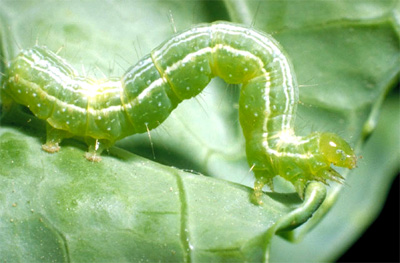
Even if the chemicals aren’t used, what are
the alternatives? Suppose, now, a particular vegetarian person decided to grow,
say, something like cabbage. Now, cabbages are also eaten by a particular kind
of caterpillar, which would, of course, dramatically reduce the value of the
harvest, or even eliminate it altogether. Now let’s assume that our vegetarian
farmer was too tender hearted to poison the caterpillars to death – and also
had a lot of time on his hands, enough to remove the insects one by one from
the leaves and put them on something else, a mulberry bush, let’s say. Now,
these cabbage caterpillars can only eat cabbage leaves. They aren’t silkworms,
and can’t eat mulberry leaves. Therefore, by putting them on a mulberry bush,
the compassionate, vegetarian farmer is merely condemning them to death by slow
starvation. Right?
Then, what happens to the food after
harvest? It has to be stored on the way to market, hasn’t it? And there are a
whole lot of other pests which attack stored grain, not just primitive
creatures like weevils, but quite advanced and intelligent animals like mice
and rats. So, you know, they’re gassed,
and poisoned, and trapped out of existence – just so those
grains can actually survive to appear on market shelves. So, just how, exactly,
does vegetarian food not involve killing animals?
Then, what about the animals vegetarians
eat along with their food? Not all animals are large and easily discernible.
The vast majority are very, very small – some too tiny to be seen except by the
microscope. And I am not talking about bacteria, or fungi, neither of which are
plants, either – I am talking about animals,
creatures comprised of eukaryotic cells without cell walls. Do vegetarians assume
they can rid themselves of all of these while washing and chopping their food?
Dream on.
At least non-vegetarians openly admit to
eating animals. Who is the hypocrite here?
3. The hypocrisy of many vegetarians (not all, that’s true), who will
refuse to eat meat, but have no problem wearing leather or silk products. Do
they imagine, you know, that all those fancy leather items and those shimmering
silk dresses come from cows which have died of old age, or moths which have
broken out of their cocoons? Because if they do, they need a little education.
Opposed to them are those vegetarians who
do not use leather or silk, but prefer, say, wool or cotton garments – wool
being, of course, sheared from sheep who are raised for the purpose and slaughtered
when no longer productive. I’m not even going to go into the uglinss of
practices like “mulesing” which are inflicted on these unfortunate animals. As
for the cotton crowd, they can congratulate themselves on having a perfectly
humane, non-violent fabric – so long as they don’t admit to themselves that
cotton is one of the most pesticide-dependent crops on the planet. Ever heard
of the boll-weevil? If not, rest assured, the cotton farmers have.
4. The so-called “moral superiority” becomes particularly hollow when
it comes to criticism of the meat
industry. Of course the meat
industry has bad practices – show me any industry which doesn’t. So, do we, you
know, try and reform those other
industries, compel them to adopt environmental safeguards – or do we shut them
down altogether? Show me a vegetarian who is willing to do without clothes rather
than reform the textile industry, for example, with its horrible slave-labour
sweatshops and exploitation of the poor. Right. Yes, the meat industry inflicts
unnecessary suffering on animals. Perfectly true, and completely reprehensible,
as well as subject to correction, with sufficient pressure – if anyone is
willing to bring it to bear. Also, of course, the vegetable industry is no better than the meat industry. It’s
not just the pesticides; there are a lot of other sharp practices, like
applying chemicals on produce to keep it appearing fresh longer, something
which is extremely common. And, of course, we’ve all heard about Monsanto. Should
we then demand the closing down of the big vegetable farms, across the board? Are we then prepared to deal with the inevitable famines?
Yet, when it comes
to the meat industry, and only the
meat industry, the vegetarian crusaders demand the baby be unceremoniously
thrown out with the bath water.
5. The vegetarian denial of
our meat-eating heritage. We are omnivorous
creatures – capable of eating both meat and vegetables. Vegetarians often
mention this as “proof” that we are perfectly capable of living on vegetables.
But we aren’t herbivores – and this
simple fact has had profound effects on who we are today.
Simply put, human society is a result of
human evolution as pack-hunting animals. All pack hunting animals, from driver
ants to orcas to hyenas and wolves, have had to evolve a complex interactive
social structure. Only by cooperating can they be successful. Without our
ancestors’ hunting behaviour, we’d have at best loosely connected social units
with little cooperative coherence, like our purely vegetarian relatives the gorillas.
Also, as a general rule, carnivores and omnivores have larger brains than
herbivores – any dog or pig is more intelligent than a cow or a rabbit – since a
large brain is necessary to track down and capture active prey.
Therefore, it’s only because our ancestors
hunted meat in cooperation that vegetarians have the intellectual ability to,
you know, condemn meat-eating. How’s that?
6. The claim that “non-vegetarians
are cruel”; in fact, the word “butcher” being used as a synonym for
cruelty. Actually, there are many ways of killing animals humanely, and the
meat industry actually uses some of them – like the captive bolt pistol used by
organised meat factories to stun cattle prior to slaughter. (The informal meat industry is actually far more cruel in its slaughter methods, to say nothing of the traditional Muslim or Jewish slaughter techniques.)
Vegetarians, of
course, are fine with ripping up plants and poisoning pests, but will always be
careful to point to the worst of the meat-production practices as
representative of all. Like all generalisations, this is not true.
Going by this logic, in fact, vegetarians
should have no problem eating roadkill or animals which have died of old age. No
cruelty of any kind, whatsoever, is involved in this.
Years ago, I posited that meat would be
grown from laboratory cells, which again would not involve any kind of cruelty.
Nor would it affect the environment, as I’ll mention next. Well, guess what?
They have actually grown such meat in the lab. Will vegetarians eat said meat,
as they should, since it involves no cruelty? Don’t bet on it.
7. “Meat-eating is
environmentally destructive”. Now, any food cycle is roughly pyramidal – in
other words, a certain base, say grass, goes to feed and nurture a smaller
number (in terms of weight) of herbivores, which in turn go to nurture a still
smaller number of carnivorous predators, which then feed a still smaller number
of apex predators, until these die and are broken down by scavengers and
bacteria to the base nutrients which go to feed the grass again. Therefore, the
higher you rise in the food pyramid, the lesser the sum total of energy, packed
as it is into fewer organisms. Ergo, to produce say one kilogram of meat,
several kilograms of feed are required – feed which could otherwise have fed
humans directly. Therefore, vegetarians – who stick to the base of the food
chain – are more environmentally friendly than meat eaters. Is that right?
Well, even if we ignore all the aforesaid
pesticide use, this is a hollow argument. Vegetarians typically base their
arguments on eating large animals, like cows or pigs, which are actually highly
energy-inefficient. It takes much more feed to produce a kilogram of beef, for
instance, than it takes to produce a kilogram of, say, chicken or rabbit – and
the latter require far lesser facilities, in terms of housing and labour, than
large animals. Just as not all vegetarian food is the same, not all meat is the same.
In fact, one of the most
environmentally-friendly meats is also right at the bottom of the totem pole –
insects like grasshoppers and crickets, which a staggering number of people
already eat. A lot of people,
worldwide, depend on insects for their protein, and there’s absolutely no
reason why food that’s good enough for poor Africans shouldn’t be good enough
for rich Westerners. Entomophagy is the diet of the future – or should be.

The
hypocrisy of militant vegetarianism:
As I said earlier in this article, I’m not particularly
concerned about vegetarians who keep their vegetarianism to themselves. I am,
however, very, very strongly against the vegetarian crusaders who will lie,
invent “facts”, and otherwise bully and blackmail people to try and get them to
renounce meat or all animal products.
Some of this is quite remarkably crude. I
recall one Indian restaurant which was compelled to close because vegetarians
in the locality began to abuse and pelt patrons with rotting – what else? –
vegetables. There are entire Indian residential societies which prohibit
denizens from eating meat (or, more correctly, from eating it within the
premises, thus directly compelling those who want a taste to eat it outside) –
and the courts have upheld their “right” to do so.
There is the right-wing Indian politician called Maneka Gandhi, whom I prefer to call Maneek!a Gundhi. This female, who was once
environment minister, has been known for her “animal rights” campaigns. Once,
for instance, she raided a government laboratory with her cohorts, forcibly
took the experimental monkeys away, and released them into the wild. The
monkeys had all been hand-reared and never had to fend for themselves; within a
week, of course, every single one was dead of starvation. On another occasion,
she had jungle mynahs released from captivity – in the centre of the city of
Guwahati. Apparently, being “pro-animal rights” means not actually having to
know anything about animals.
Well, this same Maneek!a Gundhi used to
write a weekly column which the local paper used to reprint. One of her pet
claims was that eggs were a “chicken’s menstrual blood” – a term not only
misleading but actively meant to make people swear off eating eggs, which is
actually one of the most complete foods
known to humans. Eggs contain just about everything, except Vitamin C, that
humans need, and are available in one package – instead of having to eat
multiple different items to get the same food nutrients. In fact, trying to
stop people from eating eggs (which doesn’t involve killing anything, since
virtually all eggs in the market are unfertilised) is anti-humanity; a fairly
typical instance of, in this case, vegan hypocrisy. Like a lot of other hypocritical things, it seems to me, that this is something only the rich can afford.
The “vegetarianism
is healthier” argument:
There can be little doubt that a potato is
healthier than a fat-streaked chunk of beef or pork; but again, this is
selective argument. For one thing, as I said, not all meat is the same, and rabbits or chickens – or insects, or
lab meat – are far less fat-laden than beef or mutton or pork.
Then, nutrients are much easier to assimilate
from animal tissue than plant tissue, for the simple reason that plant cells
are surrounded by cellulose cell walls. Vegetables are actually a poor source of nutrition. It’s for this
reason that herbivorous animals are either
huge, with enormously long intestines, like hippos or elephants, or have elaborate stomachs like bovines,
or have to “reprocess” food by
swallowing their own dung, like rabbits, or
have to eat almost constantly, like mice. Carnivores, who digest more
concentrated nutrients in the form of animal tissue, have shorter digestive
systems and typically have to eat much less frequently than herbivores of their
own size. Omnivores fall in between the two, and are a compromise in body
plans; but omnivores are far more able to digest animal than plant tissue.
While, of course, this is partly negated by
the act of cooking, which softens and breaks down cell walls, it still means
that a much larger amount of vegetable tissue is required to produce the same
amount of nutrient as a given amount of animal tissue. Especially when it comes
to poor people, such large amounts of vegetable tissue can be simply
unaffordable. If the choice is between eating termites or locusts, which one
can trap for oneself, or buying – possibly multinational-marketed – vegetables,
what do you think is the right thing to do? And trying to stop people from
exercising the logical choice in such a case is morally reprehensible, don’t
you think?
Then, some of the nutrients in vegetables
can simply be impossible for some of us to utilise. I, for instance, can’t
digest gram or beans, which means that vegetable protein is to a large extent
nonexistent as far as I’m concerned. What would someone in my position do then?
The choices are either eat animal
products (mostly egg in my case; as I said, I fairly rarely eat meat), or buy extremely expensive protein
supplements, or suffer from protein
starvation. What would a vegetarian or vegan suggest I do?
Again, I have no quarrel whatsoever with
those who are vegetarian from personal preference, cultural or religious
reasons, or just because they feel queasy at the thought of killing animals.
You have your reasons, and I’m prepared to respect them.
Just don’t pretend you’re better than the
rest of us.
Further reading:


