Showing posts with label evolution. Show all posts

Thursday, 4 May 2017

On Resistance

First off: This is not going to be about the war criminal Killary Klingon pretending to have "joined the resistance".

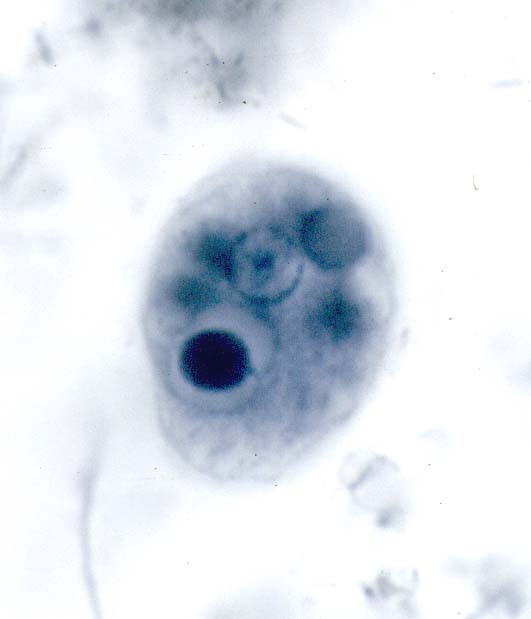
One day last week, I had severe stomach cramps and diarrhoea which prevented me from going to work. I took a combination dose of Ofloxacin and Ornidazole, which by Thursday evening had almost totally cured me (after only two tablets). This was very surprising, because antibiotic resistance is so rampant these days that one has to wait and see if the medication one prescribes even works. The particular strain of Entamoeba histolytica which had afflicted me must have been utterly unsophisticated. Village yokels in microbiological terms, really.


Back when I was in dental college 25 years ago, the usual medication for infections was Sulphamethoxazole with trimethoprim (Combined Sulpha). More difficult cases might be given Ampicillin or at most Ciprofloxacin. I don't think Combined Sulpha is even manufactured today; there are not many bacteria left that are still vulnerable to it. I haven't prescribed Ampicillin in several years, and as for Ciprofloxacin, one has to cross one's fingers and hope to hell it works.


The effective lifespan of antibiotics is shortening exponentially. Three years ago Azithromycin was a miracle drug, which could smack down just about any infection. Today I already find resistance to it, and the incidence of that is growing. There are already germs which are resistant to absolutely all antibiotics, all.


We are living towards the end of a very brief medical miraculous period in history - between the late 1930s, when antibiotics first became available, and until the point (fast approaching) when antibiotics will do no good whatsoever. Combined with capitalism, overpopulation, climate change and resource depletion, we'll be wiped out long before the likes of terrorists can get around to it.

A huge part of the problem can be put down to three sets of people. The first are the doctors, who prescribe antibiotics for just about anything, at least in this country. More on that later, but if the doctors didn’t hand around antibiotic prescriptions like toffees, there would not be so many microorganisms being exposed to chemicals and learning to grow protein shells and develop enzymes to get past them.

The second lot are the patients. As a medical professional myself, I can certify that the behaviour of patients makes them their own worst enemy. For one thing, they demand “medicines” for all problems, even those which can’t be handled by medication at all. Suppose, now, someone comes to me with severe constant toothache, and I see that there’s no swelling or fever, but an acutely tender tooth with no pus discharge. The obvious answer is that he’s suffering from acute irreversible pulpitis, which is not caused by infection and so can not be treated by antibiotics. The only treatment is root canal therapy, and I tell the person this. In more than half the cases, they demand medicine “for now”. Since I have some integrity, all I can do is give them a painkiller, with the explicit warning that this is not a cure and that they will begin having pain once the effects of the pill wear off.

So what do they do? As soon as the medicine ends, and the pain starts again, they go off to another dentist – cursing me all the while for not curing them – and get given antibiotics by him. Which don’t help, of course, and they wouldn’t even if they took the whole course, but they don’t.

Even where antibiotics are actually necessary, the average specimen doesn’t finish the course. If it’s for, say, three capsules daily for five days, you’d be lucky to get them to take two capsules daily for two days, and then, as soon as the symptoms are tackled, they’ll stop taking it. SO what happens? The germs, of course, have just had the equivalent of a mild dose of poison, and handily acquire resistance to it. And the next time round, when the medicines don’t work at all, guess whom the specimen blames for it?

The third, and worst, set of criminals is the pharmaceutical industry. India has possibly the worst and most corrupt set of pharma companies in the world. One of their standard ploys is to offer medical professionals freebies – from electronic goods at the low end of the scale to fully paid holidays abroad – if they prescribe set quotas of particular medicines. Obviously, whether the specimens need said medicines or not is immaterial; the idea is to sell the drugs, by whatever means. I have myself been called stupid and unrealistic by my own extended family members for retaining enough integrity to not do these things; but I know a huge number do.

These same pharmaceutical companies are also changing the type of medicine they produce, discarding cheaper options. An antibiotic that is still very effective is Amoxycillin, whether in isolation or in combination with Cloxacillin. However, these days it’s hard to find a manufacturer who is still offering either plain Amoxycillin or Amoxycillin+Cloxacillin. Instead, they are almost invariably pushing Amoxycillin with Clavulanic Acid, a combination whose only virtue seems to be that it is something like ten times costlier than Amoxycillin alone. I am yet to find a single reason to prescribe Clavulanic Acid, and I inform medical representatives that I don’t want to hear about it. And then I discover that without Clavulanic Acid combinations, they don’t have any antibiotics at all.

The situation is dire, and nobody wants to even think about it, let alone do something about it. With every day that passes, I feel as though I’m in the position of the Dutch boy standing with his finger in the dyke.

Unfortunately, while he’s busy trying to plug the tiny hole, the sea wall is collapsing on both sides of him.


Tuesday, 3 March 2015

Jihadi John and the 1% of the 1%: A Prediction for the Future

We live in a world run by psychos.

This is not something, of course, that I was the first person in the world to realise. As we have known for some time, leadership and success in business and politics – in most fields, probably – requires a particular kind of narcissism and the sort of sociopathy that allows one to ruthlessly use others as stepping stones and manipulate them to one’s own ends. But in recent days the process seems to be getting far more overt.

Some of the overt psychopathy is very deliberate and in your face. I don’t know where my assistant gets these videos. But a few days ago he sent me one more, of an ISIStani man cutting off people’s heads with a...sword. This wasn’t the staged and probably faked videos of people in impeccably clean orange jumpsuits, kneeling before masked evildoers and reciting prepared scripts before being “beheaded” off screen.

No, this was the real thing, with a blindfolded man in civilian clothes being made to kneel on a piece of ground soaked with blood, one ISIStani pushing down his head and another then cutting it off with one stroke of a sword. Where does an ordinary citizen obtain a sword, by the way, let alone training in how to use it? Saudi Barbaria? They then drag off the corpse to dump it on a pile of decapitated bodies. And there are at least three kids among the quite considerable crowd watching the spectacle.

Not the most pleasant video I have ever watched, you’ll understand.

[Source]

But ISIS – assuming it even exists as an entity, and isn’t a smoke-and-mirrors proxy of the Empire like al Qaeda, something which is extremely likely – is only small potatoes in the psychopathy stakes. After all, what can it do, chop off some heads, burn some people to death, crucify a couple of others, and in sum, outside its area of operations, act as at most a minor inconvenience? Unless it's artificially nurtured and kept alive by its alleged enemies like its parent al Qaeda is, in a few years, what will be left of it? Nothing.

Actually, ISIS has nothing on the real psychos, the ones who rule the planet. These are the people who inhabit what’s been called “Richistan”, people so obscenely affluent that normal life has ceased to have any relation to them. They’re further away from the common herd than any medieval emperor or sultan. They’re more isolated from common humanity than the earth is from the star Proxima Centauri. They’re, one might say, the 1% of the 1%. And they are far from alone in their attitude.

One can even watch this sociopathy grow. I’ve often spoken of the Great Indian Muddle Class, and how it’s become a parasite feeding off the country, It’s a creeping loss of all the values one used to be taught that civil society was based on. It’s looking at starving, ragged people and not only feeling no compassion for them, no desire to help, but an active revulsion, so that one’s only wish is that they were gone. It’s hate sublimated as common behaviour, and anyone who doesn’t conform to that hate is a class traitor.

And this kind of thing, sad to say, seems to be getting worse in much or most of the world. Perhaps a few relatively egalitarian societies like Cuba or the Scandinavian nations are holdouts, but as for the rest, the Richistanis and their imitators have got a vice-like grip on the planet. And since they are, actually, rich enough to create a bubble of their “own reality” around themselves, what happens to the rest of us doesn’t make that much of a difference to them as long as they get what they want. To this end they buy themselves governments to legitimise their policies, private armies to protect them, wars to further their interests, and plan for the time where they will remain essentially unchallengeable till the sun burns out.

And unlike the crude and infantile violence of ISIS, these people also create their own reality. They invent their own history, they manufacture facts to validate what they do and say retrospectively, and they don’t feel the slightest, faintest trace of shame or embarrassment.

In other words, they’re psychos.

Now, I believe that – assuming we don’t annihilate ourselves in a nuclear war, another thing I consider extremely likely – that this control by psychopaths is going to have, in the long term, significant biological consequences for our species. Yes, I said biological. Consider:

We all – those of us reading this – believe in evolution, I take it? When one section of the population of a particular species is somehow isolated, and stops breeding with the rest of the species, that’s when evolution starts separating them into two different species. So far, this separation was usually geographical; ‘islands” as they’re called. Let me take a moment to explain.

These “islands” aren’t necessarily actual islands, but ecological areas across which members of one species can’t venture easily. For instance, suppose there’s a large and very dry desert, on one side of which there’s a range of mountains, and on the other, a coastal forest. Let’s then say there’s a species of antelope which lives in the hills. Owing to the paucity of water and food, few of the antelope venture out into the desert, but sometimes – let’s say for reasons of overcrowding – a few do. Most perish from thirst and starvation, but a very few lucky and hardy ones manage to make it all the way across to the coastal forest. Now of course there is enough food and water in the coastal forest for the antelope population to build up there again, but the conditions in a coastal forest are distinctly different than in an inland mountain range. Let’s say that in the mountains long legs for jumping from crag to crag, and long horns for sexual displays and courtship battles are better for survival. But in the coastal forest long horns would merely snag in vegetation, rendering one defenceless against predators, and short muscular legs rather than long and spindly ones would be of much greater use in pushing through the undergrowth. So the two different populations of antelope would soon become drastically different in appearance, and in a relatively short span of time would – by accumulating random genetic changes – become incapable of breeding with each other to produce fertile offspring.

In other words, they’d become different species.

Now that’s something, as I said, happens in the case of a geographical separation; but what if it’s not geographical, but social?

What if the human race splits into two sections which don’t interbreed at all, or not enough to matter?

Long ago, HG Wells, in The Time Machine, postulated a future in which Homo sapiens had split into two different species, the Eloi and the Morlocks, after the ancestors of the first had forced those of the second underground as workers in subterranean factories, there to slave in perpetual darkness. Not surprisingly, this was far too communistic a situation for Hollywood to handle, which is why its first attempt at a movie adaptation had the Morlocks become merely evil savages, contrasted to the intelligent, cultured, simpatico Eloi. But that was, of course, fiction.

Still from Hollywood's 2002 movie. Anyone who knows me knows my sympathies are with the Morlocks

If humanity survives, and current trends continue, this may not necessarily remain fiction. Societies today are not only stratified, they’re becoming more so by the day, with an almost unbreachable separation between the Richistanis and everyone else. And, of course, just like the kings of yore, the inhabitants of Richistan breed among themselves.

Now this is significant. In nineteenth-century Europe, the constant intermarriage between royal cousins meant that haemophilia became an extremely common illness in those circles, because the responsible genes kept getting shuffled back and forth in the limited pool. Now, as I said, the Emperors of the World are psychopaths, who care less than nothing for what happens to everyone else. I can’t prove that this is genetic, but it might well be. What is certain is that culturally, at least, they pass on their attitudes into their own circles.

And of course they can afford the best of everything – the best food, medicine, shelter, everything. When climate change and desertification unleash starvation and disease on the world, they’ll still be the ones who will have access to those things – the only ones, given enough time. So they’ll remain more or less as they are now.

Meanwhile, the rest of the human race will become stunted through lack of nutrition, and dwarfism will become a positive survival advantage because very short people would not invest scarce food into attaining great height. People who can more efficiently use water – maybe because they sweat less, and have kidneys which produce more concentrated urine – will have greater chances of survival than those who don’t. People who are more disease resistant, in the absence of affordable medicine, will live to breeding age rather than their more delicate peers. And it’s more than probable that those who bond together in tribal groupings will have much better prospects than those who don’t.

Even then, life will be brutish and short, and rapid development to breeding age will be significantly important. If one can breed before one dies of starvation, disease or tribal warfare, one can pass on one’s genes. Not otherwise.

So, as time goes on, it’s going to be a tale of two subspecies; one, a tall, well-fed, healthy, relatively modern overclass with a very strong sociopathic streak; and the other, a scrawny race of tribal midgets with thick skin lacking sweat glands, who attain puberty quickly (devoting resources to reproduction rather than other bodily development) on the other.     

Then, I suppose, when the resources of the planet are all but run out, the overclass will sail off to the wide black yonder in a starship and leave the world to the dwarfs. 


And the meek shall inherit the earth.

Or something like that.


Friday, 24 August 2012

Long Pig


You know the story, repeated ad nauseam in bad nineteenth-century novels like RM Ballantyne’s The Coral Island, a whole genre of Italian exploitation films, and cartoons galore: explorer or missionary goes into the jungles of darkest Africa or South America, or ends up being shipwrecked on a Pacific island. Explorer or missionary is captured by savage native peoples and – if not saved at the last moment by the hero – is boiled in a pot and eaten. There’s even a name for it: Long Pig.

Well, did this ever actually happen?

Back when I was in school, I remember reading an article in a science magazine on cannibalism. According to that article, actual verified instances of cannibalism were incredibly rare, if one disregarded instances of starving people resorting to it in extreme situations (or, as a corollary, psychopaths like the German cannibal Armin Meiwes). 

These are not cannibals


This is a cannibal


Specifically, the article considered cultural cannibalism – cannibalism as a cultural practice. What it said was that most instances cited could be put down to one of these factors:

       1.     Missionary and explorer propaganda, designed to impress Europeans with tales of the savage and how valiant white men had to take on the burden of civilising them. One instance would be an account during the voyage of Captain Cook, where

“As Cook examined one of these bones, he realised in consternation that it might be from a human forearm. He asked one of the family members if these were not dog bones, but in answer the man took hold of the flesh of his own forearm and pretended to chew it.

Joseph Bank noted later: Tho we had from the first of our arrival upon the [New Zealand] coast constantly heard the Indians acknowledge the custom of eating their enemies we had never before had a proof of it, but this amounted almost to demonstration: the bones were clearly human, ... and on the grisly ends which were gnawed were evident marks of teeth, and these were accidentally found in a provision basket. [Source]


However, unless those bones were preserved and can be tested today for toothmarks in a forensic lab, I’d say that without independent confirmation, Captain Cook’s account can be firmly put in that category.

   2.  A lot of tribes told tales of other tribes who ate human flesh. In fact, these tribes used it as a propaganda weapon against their rivals. Missionaries told of how tribes would tell them, “Do not go up river, because the tribes there are fierce, and they eat men.” Whether they actually ate people was moot – the intention was to prejudice the listener. (And this also raises the question of why the listener should be prejudiced by hearing this, which is something we’ll be discussing later in this article.)

In either of these cases, the “evidence”, such as it is, seems anecdotal rather than hard; rather like the “evidence” for the Loch Ness Monster, which only makes sense if one accepts the Monster (or the phenomenon of cannibalism) is real to start off with, rather than keeping an open mind.

This isn’t meant to be confused with headhunting, a practice which most definitely existed, and well into the twentieth century among some peoples like the Shuar (“Jivaro”) of South America who are infamous for creating shrunken heads. In fact, the Shuar practice was actually encouraged by Westerners who bought the shrunken heads as curios and created a market for them.


Also, there’s the curious case of human sacrifice, which occurred all over the world, from the Aztecs (who cut the beating hearts out of their sacrificial victims with obsidian knives) to India, where bandit gangs would sacrifice captives to the goddess Kali. (As a matter of fact, stray incidents of human sacrifice, generally of kidnapped children, still occur in India today. One happened in the western part of this state earlier this year.) The interesting thing is that both taking heads for trophies and sacrificing humans to please the gods stood as stand-alone practices. They were not followed by the general consumption of the flesh of the victim, even though sacrificed goats or chickens are eaten.


Going on that basis, there does seem to be something of a cultural taboo against cannibalism.

I’m not saying there weren’t stray incidents of cannibalism, of course. It’s perfectly possible that some warriors might have eaten, for instance, the hearts of their enemies in the belief that it would give them the enemy’s courage. What I am saying is that this wouldn’t rank as a regular, continuous practice which might be considered to be part of a culture.

Why should this be? Why should humans, who consume caterpillars and whales with equal felicity, have a revulsion against eating their own kind? 

If one can eat this...


I believe we can find an explanation.

If you think about it, cannibalism isn’t all that common in nature. Starving lions and hyaenas, wolves and jackals won’t eat dead members of the group even if in extremis. Spiders, scorpions, sharks and Humboldt squids will, on occasion, but you’ll find that on the whole there are more predators who won’t eat their own sort than those who will – and among mammals, cannibalism is remarkably hard to find.

Yes, there is forced cannibalism, as of cattle being fed the ground up body parts of their fellows along with their fodder. This is a routine practice in factory farming, but hasn’t had very good effects – bovine spongiform encephalopathy, also called “mad cow disease”, is spread when cattle are forced to consume beef products to give them cheap, easily assimilated protein. The cause of this is something called a prion.

What are prions? This isn’t a digression, because I believe prions are an important explanation for the relative rarity of steady cannibalism in human societies and in nature.


A prion is probably the simplest and smallest external disease-causing factor which exists. Unlike bacteria, fungi or protozoa, prions aren’t living organisms. They aren’t even on the border of living and non-living, like viruses. Prions don’t have DNA or RNA; they are simply improperly folded proteins. When introduced into an organism, like a crystal which when put in a saturated solution of a salt causes salt to precipitate out of the solution, the prion causes normal proteins to convert into the prion form, which then goes on to cause cell damage and eventually cell death, to the detriment of the organism as a whole. Cows develop holes in their brains caused by swallowing prions along with beef products meant to fatten them up. That’s bovine spongiform encephalopathy.

And it’s not just cattle, either. There’s the case of human spongiform encephalopathy.  

As far as I know, there’s only one cultural instance of what might be called cannibalism, and that is in the Fore tribe of Papua New Guinea. Among these people, the bodies of the dead used to be ceremonially consumed by their fellow villagers, in a practice intended to return the deceased person’s “life force” to the village. This was the cause of transmission of a prion causing a disease called Kuru or “laughing sickness”, an incurable degenerative malady of the central nervous system.  One of the features of Kuru is that the majority of victims were women and children; this was because the prions were concentrated in the brain, which was among the body parts left for women and children to consume after the men had taken the choice parts, the muscle and fat.

Considered on this basis, the taboo against cannibalism might make real, evolutionary sense. Some ancient protohumans, like Peking Man, were perhaps cannibals, but the practice doesn't ever seem to have become widespread across protohuman populations. Why not?

If a society – or a species – had a high incidence of cannibalism, the circulation of prions would mean that there would be a high level of debility and mortality among those who did eat their own kind. Those who did not, for whatever reason, would have a higher chance of spreading their genes to the next generation, thus ensuring that their offspring would also be less liable to be eaters of their own dead. Simple evolutionary competition would then mean the non-cannibals would displace the cannibals.

Pretty soon, cannibalism would become a biological threat to the tribe, even though its members wouldn’t consciously verbalise it to themselves in such terms. What they’d do is condemn cannibalism as a forbidden act, like incest, another extremely common taboo worldwide. (If at all it was allowed, only specific categories of people - like priests - would be permitted it, and then only of ritually permissible parts of the body, like the heart, which wouldn't be loaded with prions.)

In general, cannibals would be worthy of disgust and hatred, something less than human.

And that’s why the missionaries and the explorers lied.


Monday, 16 April 2012

But If Mars Has Life


One of the most interesting bits of news in the last few days seems to have been largely ignored by media obsessing over what some “celebrity” wore in a function or what a politician’s latest profundity on this or that might be.

Simply put, it was this: that there is, almost to a certainty, life on Mars. And this life was discovered as long ago as 1976; only nobody recognised the fact till now.

Think about that; 1976, when I was just starting school, the Vietnam War had been over only a year, a mulitlateral world order still existed, there was no such thing as a cell-phone or the internet, and the Viking rovers were digging into Martian soil. The scientists didn’t recognise it then, but the data didn’t vanish, and re-examination showed that there’s, apparently, a 99% chance that the Red Planet actually has life. In most statistical systems, a 99% chance is considered about as close to a sure thing as you can get.

In other words, there are almost certainly Martians, though they aren’t climbing into cylinders and blasting through space to land in your backyard and disgorge tripod fighting machines. Not yet, anyway.

These Martians are, if they exist, bacteria, or organisms analogous to bacteria. You know bacteria? Those tiny things somewhere between the worlds of the viruses and the earliest, smallest algae, which aren’t even eukaryotic in their cell structure? I mean those bacteria, or organisms equivalent to them.


This might not seem like a big deal. And, actually, it isn’t a big deal.

It is a humongous, a gigantic, a titanic deal.

From our viewpoint as self-appointed lords of the earth, bacteria aren’t significant. In reality, they are so significant that life as we know it would be impossible without them. Everything – but literally everything – that can be considered “life as we know it” ultimately depends on bacteria. (And a note here, referencing HG Wells’ The War Of The Worlds, in which the Martian invaders died off because Mars didn’t have bacteria and so they had no defences against them; that is simply not possible. Without bacteria, Wells’ Martians could never have existed, since all organic matter would have been locked up in corpses which could not decompose and release their nutrients to the environment. The first generation of complex life would have been the last. So there.) And there are, correspondingly, more bacteria than there are anything else. In terms of numbers, almost all life is bacteria. Such gigantic creatures as blue whales, humans or cockroaches are infinitesimal compared to them.

It’s not just that bacteria are somewhere else, either. A few days ago I’d written an article in which I pointed out, inter alia, that we humans have, on average, a hundred trillion bacteria in our bodies. When we’re looking in the mirror, we are viewing a composite organism, most of which is bacterial. We are part bacteria ourselves.

So, yes, bacteria on Mars are something of a gargantuan deal; but it’s more than just the fact that bacteria are important to life.

Mars, as you may know, isn’t exactly the canal-irrigated, hospitable world that nineteenth-century science fiction would have led us to expect. It is, in fact, a cold, extremely arid planet where there hasn’t been running water for billions of years, a planet with an atmosphere that isn’t exactly breathable by our standards – what little there is of it. Think of the moon with a thin wrapping of carbon dioxide, and you wouldn’t be all that far off.


And yet, Mars has, it seems, bacterial life. And I don’t mean possible fossils in an ancient meteor, though those are important enough; I mean actual, feeding, reproducing, bacterial life.


What does this mean? It means something extremely important, so important that we humans should stop murdering each other and think about the implications. And those implications are these:

Firstly, if Mars has life, active bacterial life, then we are not alone in this solar system, let alone the Universe. It doesn’t matter that this life is “just” bacterial life; its very existence immediately knocks humanity off its self-styled pedestal as the pinnacle of creation. All right, so it’s “only” bacteria; but, as I said, bacteria (or equivalents) are essential to the existence of any more organised life. If you don’t have bacteria, you have nothing. Ergo, if bacteria exist elsewhere, the fundamentals of life exist elsewhere. And that means...

...that, secondly, if bacteria can exist in an environment as inimical as Mars, then they can exist just about anywhere; in fact, we don’t have to depend on “goldilocks planets” to find life. If life can exist on Mars, then we can expect to find it almost anywhere, from the seas of Europa to the atmosphere of Jupiter, from the planets orbiting nearby stars to the gas clouds between the galaxies. It might well be that lifelessness is the exception.

Now think about that for a moment; not in scientific terms, but in philosophical.

Not so very long ago, the earth was a flat disc, around which the sun, moon, and entire cosmos revolved. It was the centre of all creation, the only favoured place of the gods, and, of course, the ruling species was the pinnacle of creation – so much so that the majority of religions ascribed to the gods the same physical characteristics as humanity. But time passed, and the earth – in spite of the efforts of the Catholic Church, which burned Giordano Bruno at the stake for stating that the sun was a star and other worlds could have life – shrank to a sphere orbiting the Sun, which briefly took its place as the centre of creation, before becoming an ordinary little star on a spiral arm of an ordinary galaxy in the seas of time and space; hardly a fleck in the heavens. And, simultaneously, that most favoured species of the gods became just another ape, the result of random mutations and evolutionary pressures; a creature which has existed for the blink of an eye, and might vanish tomorrow when circumstances change – as they will.

So now, when we suddenly have to consider the fact that we are definitely not the only place in the cosmos which has life, and we have to consider the possibility that the cosmos is teeming with life, what does that do to us, the former Centre of All Creation? We shrink to the position of, perhaps, a gnat, or worse. We are as nothing.

Can we – do you think human society, especially human society as regulated by absolutist Abrahamic religions, is ready to deal with that realisation? When you consider that the nation which arrogates to itself the right to rule this planet as its private domain, the nation which claims to be the fount of enlightenment and liberty, still can’t make its own citizens accept the fact that they are simply evolved apes, then what chance do you think this further realisation stands?

And this is why, I think, we aren’t going to hear much about the Martian bacteria; in fact, I’ll even say efforts to confirm their existence will be killed off by deliberate underfunding and suchlike underhanded tactics. Unless there’s a potential military or other profit-making applicability, the powers that be are scared of science. They absolutely do not wish to know. And if these bacteria are confirmed, you can bet the news will be carefully buried in other chatter.

Of course, that won’t stop the Martian bacteria from existing, just as the Creationists can’t erase evolution just by denying it. Even King Knut couldn’t turn back the tide.

But it’s a tragedy on a Cosmic scale that we allegedly rational creatures don’t take this opportunity to measure our own place in the wonder that is the Universe, and realise what a precious bubble of life we inhabit – this beautiful blue planet, where bacteria are just the foundations on which everything from elephants to earthworms, from earwigs to echidnas, have evolved. We should come together now, to preserve what we have. Unfortunately we just keep on destroying it.

Looking at it from the level of sustainability, then, the Martian bacteria may be the favoured ones.


Further Reading:

Tuesday, 10 April 2012

Metropolis


You are a metropolis.

On your eyelashes, creatures crawl, tiny eyeless mites with stubby legs and translucent bodies; creatures which are born, live and die in the follicles of those hairs on your eyelids. 

Yes. I am talking about this.


They eat a little of the oil your sebaceous glands produce, and they have such efficient digestive systems that they don’t defecate at all (in case you’re wondering whether mite faeces is oozing down your lashes as you read this, no, it isn’t).

Your mouth is a teeming wilderness, populated by millions of flora and fauna, including a substantial portion of the hundred trillion bacteria which inhabit your body. Bacterial colonies stick to the top of your tongue in mats and sheets, and swim through the mucoprotein layer covering your teeth and membranes. Protozoa of the Entamoeba group crawl around your gingival crevices and you swap them around with your significant other with every deep kiss.

Feel like snogging now?

A few of these creatures are harmful, stowaways with an agenda as it were; a much larger majority are, under normal circumstances, passengers in your mouth, eating dead cells, food particles and generally doing you no harm and possibly – by occupying space that would otherwise be taken up by the harmful ones – doing you some incidental good.

Then, let’s take a look inside your intestines. Even if you aren’t among those who harbour cute little parasitic worms (or, for tapeworm hosts, cute big parasitic worms), your intestines are full of tiny creatures hopping, skipping and jumping around, from bacteria to yeasts. It’s more than a rain forest in there in terms of the richness of life, more than a coral reef. And you cannot survive without those microorganisms. You are dependent on them to keep you alive. For one thing, some of them break down cellulose in the plant matter you eat, thus liberating the interior of the cells to your digestive juices. For another, they, even those whose only purpose of existence is to nibble fastidiously at fragments of your forming faeces, aggressively block out the others – the millions upon millions of less than pleasant microorganisms you swallow each day. 


I have a gut feeling about this.


Want to know what would happen if those microorganisms all vanished from your gut? Have you ever had a course of antibiotics and suffered the side-effect of diarrhoea? Yes? Well, that’s because the antibiotics have waged indiscriminate chemical warfare on the forests and jungles inside you, like a kind of Agent Orange in your inner Vietnam. And until the survivors grow back to fill the empty spaces, undigested food flows through you like...well, like undigested food flowing through you. Now imagine that going on all the time, and worse; imagine all these microbes vanishing. Will the space they vacate, all that lovely real estate, remain empty? Of course not; it will be flooded by invaders, murderous marauders from the outer light, whose only purpose is to consume and destroy.

Consume and destroy you, that is.

But such a marvel is evolution that it fills every nook and cranny, quite literally, with life, and seeks out, always, to fill it with viable life. That is why the passengers on your body block the enemy without; they want to keep living, and it's in their interests that you keep living. They've evolved to help keep you alive, just as you've evolved to tolerate their presence in your body.

You are a metropolis, larger by far than any the mere human race has ever built, and your countless citizens are keeping you a living city, simply by going about their daily business. You are a city that never sleeps, that never can. So look in a mirror, and call yourself we.

And tonight, as you lie down to put your conscious brain to rest, remember those mites crawling demurely along your eyelashes, eating, meeting, breeding, and otherwise leading their own doubtless meaning-filled lives. Remember the teeming millions of your passengers, who aren’t even aware that you exist as a living entity, and yet for whom you are a universe. Think of them a little.

Pleasant dreams.