
Showing posts with label baboon chronicles. Show all posts
Showing posts with label baboon chronicles. Show all posts
Friday, 15 September 2023
From The Baboon Chronicles


Friday, 3 January 2020
From The Baboon Chronicles
Once upon a time, long ago, there was a
baboon troop that lived in a tree by an oasis.
It was a splendid tree, full of succulent
fruit; and below the tree’s bark scurried juicy beetles, which could be scraped
out with a diligent claw and crunched down with relish. And the tree’s branches
were studded with thorns, so sharp and long that not even a leopard would dare
venture to climb into it.
So the baboons prospered exceedingly. All
day they ran around on the ground, rooting for worms and seeds, and drank
deeply from the water hole. And at night they climbed on the tree, chewed at
fruit and insects, and slept safely until the new day.
On the far side of the oasis there lived an
old crocodile. The crocodile was very old and very large, and he did not bother
the baboons at all, for they were far too swift for him to catch, and too small
to be worth the effort. All day he lay on the shore, his jaws open to let the
cleaner birds peck rotting food from his teeth. In the evening, as the baboons
retreated into their tree, he would slip noiselessly into the water, and wait
for the antelopes and zebras to come down to drink. And then he would hunt, and
if he was successful, he would not hunt again for several days, for he never
killed more than he could eat. This was the crocodile.
Now it so happened that one day a young baboon
found a glittering stone by the water. It was red and blue and white and
glittered in the sun, and the baboon liked it exceedingly. Holding it up in his
paws, he rushed back to the tree to show the other baboons what he had found.
“It is pretty,” the baboons all said, “but
it isn’t any use, is it?” And they glanced at it out of the corners of their
eyes, for they were all taken by it.
“If you give it to me,” one of the other
baboons said, a big baboon, with a mane like a lion. “If you give it to me, I will give you three
extra fruit and a beetle tonight.”
“But I can find three fruit and a beetle to
eat by myself,” the young baboon said. “Why should I give it to you?”
“I live on the branch with the best fruit
and beetles in the tree,” the big baboon responded. “I can give you bigger,
tastier fruit and juicier beetles than you would find elsewhere.”
So the young baboon gave the big baboon the
glittering stone, and in return got three fruit and a beetle, which were
perhaps bigger and juicier than elsewhere on the tree, or perhaps not; but they
certainly looked bigger and juicier
to the other young baboons.
And the other big baboons looked at the
glittering stone and each said to himself, “He has a stone that we don’t. He
will claim to be better than us because he has the stone. Therefore I must get
my own stone too. But where can I find one?”
The next morning the big baboons each
discreetly called some young baboons to him. “Find one of the glittering stones
for me,” they said, “and I will give you four
fruit and two beetles to eat.”
And all the young baboons went out on to the shores of the oasis, and dug
assiduously among the rocks and sand and grass, looking for a stone. And by the
end of the day each had found one stone, except one, who had found two.
That night all the big baboons had a stone
each, except one, who had now two. And all night the other big baboons twisted
uneasily on their branches, looking at their stones and reminding themselves that
one of them now had two.
So the next morning they summoned the
younger baboons again. “Get more stones,” they said, “and you’ll get five fruit
and three beetles to eat.”
All day the young baboons toiled, searching
for stones instead of looking for food for themselves; and when they finally
arrived, tired and hungry, they had found enough stones so that each of the big
baboons had got more. Some now had two, some three, some even four or five, and
one or two even had as many as seven.
“This will never do,” the baboons who only
had three or four each said to himself. “Tomorrow I must have more stones than
anyone else.”
“But,” the young baboons whined the next
morning, “we spend all our time looking for these stones, and we have no time
left over to get food or water for ourselves; the few fruit and beetles you
give us at night are hardly enough to assuage our hunger and thirst.”
“How dare you,” the big baboons roared. “We
give you these excellent fruit and beetles from our branches, which you have no
right to taste otherwise, and you will not even look for stones for us. Very
well, we will not allow you to eat even a single fruit, or a single beetle,
from the tree. Let us see how you manage to live on seeds and roots alone.”
Soon, then, the young baboons were
starving, for all of them were forced to compete for the few seeds and roots
and insects in the grass by the oasis, and not touch even a single dried-up
rind of a fruit from the tree; and when, at night, they crept up into the
branches for shelter, the big baboons chased them away with fearsome roars and
gnashing of teeth.
“You won’t eat from our branches, you won’t
sleep in our branches,” they said. “Away with you!”
“But we’ll starve to death,” whined the
young baboons, “or the leopard will get us.”
“That is none of our affair,” the big
baboons said. “You are responsible for your own plight.” And they went up into
their tree to eat fruit and scratch up bark to find beetles to gnaw on, while
the young baboons went off hungry into the night to find what shelter they
could.
Soon enough, as the big baboons had known,
the young baboons one by one crept back begging to be allowed to look for
stones in return for fruit and beetles and shelter. “Very well,” the big
baboons told them, “but you’ll get only one fruit and one beetle for each stone
you find. You’re lazy and greedy and we don’t have enough to feed your greed.”
So the young baboons spent all their days
searching for stones, and gratefully eating whatever fruit and beetles they
could earn from their labours. But, as time went on, little by little they had
searched almost the entire shores of the oasis, and collected all the stones
they could find, and there were no more to be found.
“Get us more stones,” the big baboons
thundered. “We need more stones.”
“There are plenty of stones on the other
side of the watering hole,” the young baboons reported, “but we cannot reach
them. They are where the old crocodile spends his day basking in the sun. If we
come close to him, he will bite us in half.”
“We must have the stones,” the big baboons
declared. “The evil old crocodile is stealing our stones, the stones that belong to us. We will make war on him!
He is old and stupid, and we are many and have sharp claws and teeth. And,
besides, the Great Baboon is on our side, so we cannot possibly lose.”
And so the baboons formed into an army and
stormed the other end of the oasis, where the old crocodile was dozing
peacefully in the sun. They came hooting and howling, throwing stones and sharp
sticks as they came, their fangs and claws bared.
The old crocodile watched them come, and tolerated
their stones and sticks and their sharp bites as long as he could.
Then he stirred, and with one sweep of his
tail he smashed half the baboons into the middle of next week. And he opened
his gigantic jaws, and bit the other half in two with one snap and a half.
Then he went back to sleep on the shore,
because the day was only half done.
And the stones around him glittered, green and
white and red in the sun.
Copyright B Purkayastha 2020
***********************************************
Note
to Reader:
The above is not meant to be satire on the Amerikastani warmongering against
Iran, culminating in the murder of General Qassem Soleimani.
And if you believe that the above is not
meant to be satire on the Amerikastani warmongering against Iran, you must be
an idiot...or else an Amerikastani.

Saturday, 27 February 2016
From the Baboon Chronicles
Once upon a time, there was a large valley
among the mountains in which lived several troops of baboons.
Now, this valley was large and the
topography was varied. Some parts of it had abundant water and trees laden with
fruit, while others were drier and had nice juicy locusts and beetle grubs, and
yet others, high on the slopes overlooking the valley, had herbs growing which
could cure most illnesses.
There was also a certain kind of nut which
grew in the valley. These nuts weren’t eaten by the baboons most of the time,
because they were hard-shelled, difficult to break, and not really very tasty
at all. But they kept excellently, and so the baboons stockpiled them for times
when the food supply ran low. These nuts grew more in some parts of the valley
than in others, and they grew in greatest profusion in those parts of the
valley which were most arid, desolate, and isolated – in fact, those that had
hardly anything else at all.
“We have nothing else but these nuts,” the
troops of baboons which lived in those areas said. “We have no fruit, or beetle
grubs, or even locusts here, which keep the other troops so well. But we have
the nuts, and they do not.”
“We should trade with the others for their
fruit and beetle grubs and locusts,” the baboons then said to each other. “That
way, we can have the best of what the others have, and they can have the nuts
that can keep them alive during times of trouble.”
And so the baboon troops began trading with
each other, and soon the nuts became the currency of exchange.
Now it so happened that among the baboon
troops there was one which, while not the largest, was peculiarly vicious and aggressive.
This particular troop, in fact, had occupied a prime part of the valley by
attacking and driving away the more peaceable troops that originally occupied the
spot; and though it had plenty of water and fruit, locusts and beetle larvae,
the troop was not satisfied.
“We must take as much of the fruit and
water, locusts and larvae, as we can from the other troops in the valley,” the
elders of the troop declared. “Our baboons deserve nothing less!”
“We are the greatest troop of all,” the
troop said. “Clearly the Great Baboon favoured us above all others, and we are
exalted in His eyes.”
“But,” some lesser baboons ventured, “we
have hardly any nuts growing here, so we have nothing to trade with.”
“That does not matter,” the elders declared
confidently. “We have stones aplenty in our territory. We will force the other
troops to accept these stones in lieu of nuts.”
“But what if the other troops do not agree
to accept stones instead of nuts?” the lesser baboons demanded.
“Why, we’ll promise to exchange them for
nuts at some time in the future,” the elders said. “And they can wait forever
and a day for the future to come, as far as we’re
concerned.”
“And if they should refuse to accept the
promise?” the lesser baboons countered.
“Are we not the strongest, meanest, most
vicious troop in the valley?” the elder baboons snapped. “Who dares stand against
us? Are you un-Troopian, and therefore you oppose what is best for our troop?
Do you oppose the will of the Great Baboon?” And they signalled, so that
cohorts of the most aggressive and savage of the baboons closed in around the
dissenters. “Well?”
Seeing no alternative but to acquiesce, the
lesser baboons gave in, except for a few holdouts, who were accordingly torn to
pieces. And the Troop of the Great Baboon went out to the others, and forced
them to accept stones in lieu of all their fruits, and larvae, and locusts.
Whenever any troop refused, or claimed that they did not have enough for their
own use to be able to spare any for themselves, the Troop of the Great Baboon
invaded their territory, massacred them, and took everything that it wanted,
scattering a few stones as payment. And the other troops shivered in fear when
they saw all this, and most of them gave in meekly.
One year it so happened that there was a
drought on the land, and the supply of food was growing short. The Troop of the
Great Baboon had no nuts growing in their own territory. Moreover, having long
since decided that they could go and take by force whatever they could not
exchange for stones, they had bothered to save no food at all. And they looked
around them and realised that they would have to acquire food from the other
troops, if they were not to cut down on the amount they had grown used to
consuming.
“It is clearly not intended by the Great
Baboon that we should starve,” the elders said. “Therefore it is not just our
right but our duty to take from other lesser troops what we need.”
But the other troops themselves had little
left over, and they refused to accept payment in the form of stones; so the
Troop of the Great Baboon attacked their lands, expecting that they would give
up like always before. But the lesser baboons knew that it was a question of
their very survival, so they fought like they had never fought before. And the
Troop of the Great Baboon was forced to spend more and more blood on fighting,
and got nothing at all in return.
Now among the Troop of the Great Baboon
there were two cliques, which distinguished themselves from each other by
staining their muzzles with the juice of berries; one group stained itself
blue, and the other red. Both these cliques squabbled much among themselves,
loudly and angrily, as a matter of course, and each claimed to have the special
favour and divine sanction of the Great Baboon himself.
Every few years these troops would gather
to select from among themselves an Elder of Elders, who would rule over them.
Each clique would choose one from among themselves, and all the baboons would
throw sticks into a circle, which would then be counted. The clique which
managed to throw more sticks into the centre of the circle would get to have
its chosen baboon become the Elder of Elders. And then they would go right back
to living, and squabbling, as usual, until next time.
Now this time the food situation, owing to
the failed battles, was getting serious, so the two cliques began screaming
even louder than usual to lay their claims to the position of Elder of Elders.
“If I win,” the candidate from the Blue
clique, who was already one of the troop’s most vicious enforcers, declared, “I
will send even more baboons to attack even more troops – and all the food they
capture, I’ll make sure to distribute among the troop members. Well, of course,”
she added hastily, “some will get more than others, but that’s how the world
is.”
“I’ll end all the wars,” the other
candidate, from the Red clique, declared, “and bring the baboons home. Of
course, we’ll have less food that way, so everyone will have to eat a little
less. Of course,” he added as hastily, “ that doesn’t apply to the elders, who
need all the food they can get to have the energy to lead our Troop.”
“He’s right,” the Red clique yelled. “No,
she’s right!” shrieked the Blue clique.
And the baboons gathered to select the
Elder of Elders at the circle. They gathered, and as the time of the casting of
the sticks grew nearer they began squabbling more and more, and then they began
to bite and scratch and wrestle each other.
“Which of them has won?” they demanded,
after throwing their sticks into the circle at last. “Ours, who is the Anointed
of the Great Baboon...or theirs, who isn’t?”
The baboons whose task it was to count the
sticks picked them up, and looked at them, silent.
“Well?” the cliques demanded. “Which is it?”
The baboons just stared at the gathered cliques.
“What difference does it make?” one asked at last.
And the gathered baboons looked at each
other, at the juice which had rubbed off and mingled during their fighting, so
that red and blue were mixed and matched to a uniform purple. They looked at
each other, and then at the two candidates.
And already it was impossible to say which
was which.

Saturday, 26 December 2015
From the Baboon Chronicles
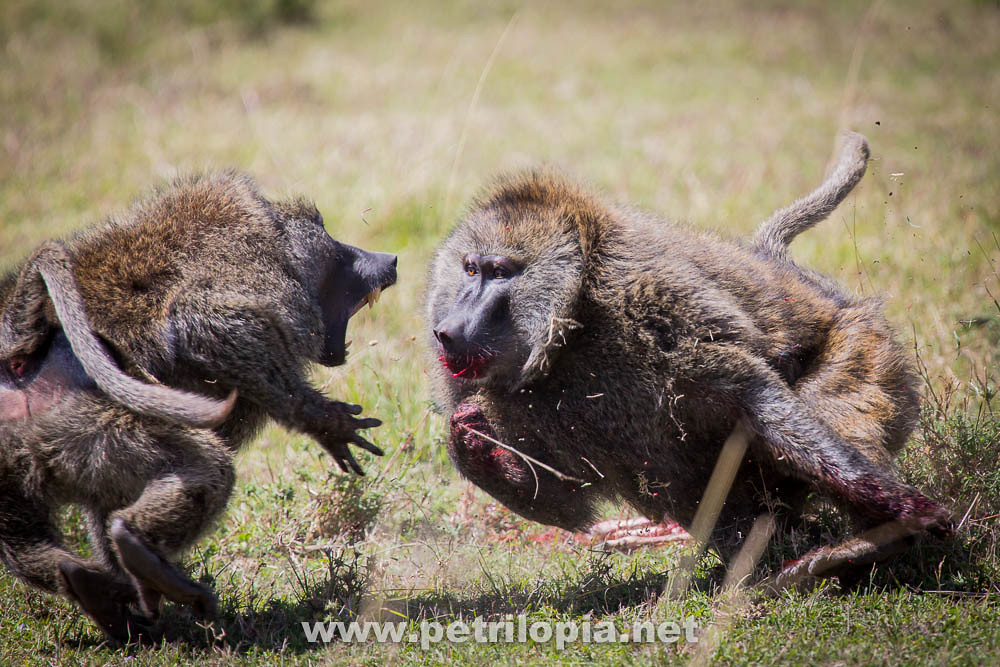
Once upon
a time, two baboon troops lived in a valley in the mountains.
It was a deep and pleasant valley, verdant
and fertile, and covered with trees which bore large and luscious fruit, with
long grass with tasty seeds, and juicy insects which burrowed in the ground and
scurried among the roots. The streams that ran through the valley were deep and
cool, and the water holes fresh and clear.
The two troops of baboons lived on opposite
sides of the valley, with their territories separated by a river. The name of
one troop was the Blue troop, because of the colour of its members’ faces; the
other was the Red troop, because that was the colour of its members’ behinds.
One year it so happened that a great
drought came on the land, a drought so severe that the water holes and pools
shrank and almost disappeared, and the earth became hard and cracked as
sun-dried brick. The grass and leaves withered and turned sere and brown, and
the sky, day after day after day, was the colour of burnished brass.
So severe was the drought that the food the
baboons ate, the seeds and nuts, became as hard and dry and without nutrition
as pieces of gravel; and the insects burrowed deep under the ground, so deep
that even the baboons could not dig them out. So severe was the drought that the fruit on
the trees remained the only food to be found.
And as the months passed, the drought
became more and more severe; the sun seemed to suck every drop of water from the
very land and air, and even the fruit became dry and wrinkled, and hard as
stone. The water holes dried to puddles of damp soil, and finally vanished. The
river shrank, too, from a broad, crystal clear flood to a narrow thread of liquid
mud. And still the drought went on.
Then at last the two Blue leaders called
all the members of their troop together. “Clearly,” one said, “there is not
enough food and water on our side of the valley for us to survive on. We must,
therefore, make up our minds what to do.”
“We can either leave the valley altogether,”
another continued, “and look for better pickings on the mountains, where
perhaps, among the scrub and the thorn trees, we may find some trickle of water,
some nest of insects, to keep us alive. We can leave this valley, which is our
birthright, for the uncertainty of life on the mountain. Or...”
“Or,”
the first leader continued, “we can drive out the Red Troop that occupies half
our valley. The Great Baboon gave us
this valley for our own, and proved it by providing us all the food, and water
that we might need. But we have been sharing His gifts with the Red
interlopers, who have no place in this valley, and have no rights to anything
of ours.”
“Clearly, that is why the Great Baboon has
brought down this drought on us,” the second leader said. “He wants us to drive
out the Reds, and occupy the whole valley, which He has given us in His
infinite wisdom. There is still enough food and water in the whole valley for
our troop, as long as we do not share with anyone.”
The first leader glared around at the
baboons. “And if we hesitate,” he said, “if we dally too long in making up our
minds, the Reds will attack us, and drive us out, and take over the valley for
themselves; for they are evil and bitter, and envy us in all things we do.”
“What should we do then?” the second leader
asked the assembled troop. “Should we give up our birthright and become
wanderers on the mountain slopes...or should we fight?”
“Fight!” the assembled baboons shouted in
unison. “We must fight!”
“See,” the first leader replied, “the Great
Baboon has even made it easy for us to invade their land, by drying up the
river to a muddy trickle. He has paved the way to our victory!”
“Attack!” the second leader commanded. “Attack
at once, and drive out the Red interlopers to the wastes from which they came!”
So the Blue troop rose up at one, and
rushed across the river, and threw themselves on the Red troop on the other
side. But the Red troop had seen them coming, and fought back with such courage
that they broke the Blue advance, and at the end of the day, though there had
been a mighty slaughter, neither side had won a victory.
That night the Blue leaders called their
troop together again for a council of war. “We have lost many,” the baboons
complained, “and gained nothing. Many of us are weary and wounded, bruised and
bleeding. We no longer believe that we can win so easily.”
“But no,” the first leader said, “we cannot
give up now. Tomorrow, we must attack at first light again, for if we step back
now, it will embolden the Reds, and make them think we are weak.”
“Besides,” the second leader added, “if we
do not continue the war, if we stop fighting, it would only mean that all the
blood we have shed has been shed in vain. So we must keep fighting.”
So the next morning the Blue troop again
attacked across the river, and there was more slaughter. But once again the Red
troop fought back with mighty courage, and after a day of bitter combat, both
sides, as before, were locked in a stalemate.
Once again the Blue leaders called a
council of war, and loud were the rebellious muttering from the troop. “If the
Great Baboon had wanted us to win the war,” the baboons said, “He should have
given us weapons to fight with, which the enemy cannot counter. As things are,
we can kill each other, but we can’t win.”
The two Blue leaders looked at each other. “But
there are weapons,” the first said, pointing to the branches overhead. “Look,
the Great Baboon, in His wisdom, has dried the fruit until they are harder than
stones, and easier to throw. What better weapons can there be?”
“But the fruit are the only food we have
left,” the baboons argued. “How can we waste them in fighting?”
“When we have driven out the Red troop,”
the second leader proclaimed, “and have the whole valley in our hands, there
will be fruit enough for everyone.”
“So gather the fruit and keep them to hand,”
the first leader ordered. “Tomorrow, we will attack them again and destroy
them.”
So the next morning, the Blue troop, for
the third time, rushed across the river to the Red side, this time flinging
fruit before them with all their might as they went. Though the Red troop was
taken by surprise at this tactic, they fought back as bravely as they could. Even
so, little by little, they were driven back, until at nightfall the Blue troop
held half the Red territory.
Then the Blue leaders called the troop
together again. “See,” the first leader said, “Another day will win us victory.”
“But they are still fighting hard,” the
baboons said, “and we have both shed so much blood that perhaps it would be
better if we shared the valley, and everything would belong to everyone.”
“That would be heresy and sacrilege,” the
second leader proclaimed. “The Great Baboon has armed us, shown us our duty,
and set our feet on the path of righteousness. We cannot fail Him now.”
“But we have exhausted all the fruit we
brought,” the baboons said. “We have none left, and tomorrow we must fight
again.”
“There are plenty of fruit here,” the Blue
leaders said, pointing at the trees around them. “The Great Baboon has provided
us with the fruit here, and blinded our Red enemies to their use as weapons.
Clearly, it is our duty to gather them for tomorrow’s fight.”
So the Blue baboons gathered the fruit, and
when morning came, they continued the desperate battle. The Red troop, made
desperate by the precariousness of their situation, fought back quite as hard,
flinging sticks and stones, fighting with teeth and claws. But the fruit
prevailed, and, step by step, the Red troop was driven back, until at last, as
the last light of the day departed, they, too, quit the valley for the mountain
slopes.
Then the Blue leaders gathered their troop
together. “All hail the Great Baboon,” the first leader exulted. “He has given
us victory, and our valley back again.”
“We shall have a great feast to celebrate,”
the second leader said. “Prepare for it at once!”
“What with?” the baboons asked. “What shall
we eat at this feast?”
The Blue leaders looked at the troop, suddenly
silent; and the troop looked back at them.
And the branches of the trees stood stark
and bare in the darkness of the gathering night.
Copyright B Purkayastha 2015
 |
| [Image Source] |
Tuesday, 11 March 2014
From The Baboon Chronicles
Once upon a time, in a remote valley, there
lived a troop of baboons.
The troop was fairly large, and considered
itself fortunate, for the valley was well-watered and fertile, with plenty of
fruit and grubs to eat; and the leopard, which they all feared, never visited
it.
“We are so fortunate,” the baboons said, “that
we must be Blessed. There must be a Great Baboon who is very pleased with us.”
“He must be sitting on top of that mountain
in the distance,” some of the baboons replied. “From there he can see us, and
everything we do. If we are to stay in his favour, we must keep pleasing him.”
“Yes,” the other baboons agreed. “Let us,
therefore, take the best of the fruit and grubs we collect, and leave them at
the foot of the mountain, so that he may be content and happy.” And so this was
done.
Time passed, and the baboons grew
increasingly curious as to the nature of the Great Baboon who had so blessed
them.
“If he’s so powerful,” some of the baboons
said, “he must be very large and strong, and more than us in every way. His fur
must be thicker and more lustrous, his teeth longer and sharper, his eyes
keener, and his rump even redder than ours.”
“No, no,” other baboons answered. “Red
rumps are only for us ordinary baboons. For the Great Baboon, that could never
do. No, the only possible colour for the rump of the Great Baboon is blue.”
“That is an insult to the Great Baboon,”
the first group of baboons retorted. “The Great Baboon could never have a blue
rump. Why, the very idea is ridiculous!”
“Look who’s talking,” some of the second
group sneered. “They think they can set down rules for what the Great Baboon
could be like. Why, they’re setting themselves up above the Great Baboon
himself!”
“Heresy!” the rest of the second group
agreed. “They are going to make the Great Baboon angry with their presumption,
and he will punish us all. We must destroy them!”
So the blue party attacked the red party,
who fought back. Great was the slaughter, and much blood flowed. The red party
fought with teeth and claws, because they thought it was blasphemous to use
sticks and stones. The blue party had no such inhibitions, and therefore, after
a long and hard struggle, ultimately prevailed.
“We must destroy the remaining red
heretics,” the blue party decided. And so it was done.
Then one day the lightning flashed
continuously round the top of the mountain of the Great Baboon, and the thunder
came rumbling across the sky, terrifying old and young baboon alike.
“The Great Baboon must be angry,” the baboons whispered.
“We have done nothing to make him so
furious,” the baboons said. “We have given him the best of all the fruit and
grub we found. We have destroyed the blasphemers who dared suggest he had a
mere red butt. So he must be angry over something else.”
“Perhaps he is ill,” some of the baboons
suggested.
“That must be it,” the others agreed. “He
must be in agony.”
A peal of thunder sounded, so strong that
the land seemed to shake.
“He must have a thorn in his paw,”
suggested some of the baboons. “That is a cry of agony just as when one of us
gets a thorn.”
“How can the Great Baboon have a thorn in
his paw?” the others objected. “That is patently ridiculous. He must have a pain
in his belly.”
“And who are you to say what he may have
and may not have?” the first lot shot back. “Do you mean to say you know better
than the Great Baboon himself?”
“Heretics!” shrieked the second group. “They
must be eradicated, for the greater glory of the Great Baboon!”
And so there was slaughter. In the end the
thorn-paw group prevailed, and killed all their stomach-ache opponents. And
only moments afterwards, the thunder stopped and the sun came out.
“That proves it,” the thorn-paws said. “We
were right, and the Great Baboon is pleased.”
And, three days later, the thunder came
again.

Copyright
B
Purkayastha 2014
Thursday, 6 June 2013
From the Baboon Chronicles
Once upon a time, a long way away from
here, a baboon troop lived in a valley in the middle of the desert, in the lee
of a high and rocky mountain.
It was a lush and fertile valley, for all
that it was surrounded by stony hills and sand stretching to the distant
horizon, for in the valley there was a deep oasis filled with cool, fresh
water, around which grew trees heavy with fruit. It was, in fact, a wonderful
place for the baboon troop, because not only did it have plenty to eat and
drink, but because no leopard could possibly reach it all the way across the
desert. In consequence, they called themselves the Great Troop.
There were a few other small valleys
nearby, mere scratches in the earth, with scraggly acacia growing around water
holes which scarcely held anything more than liquid mud. A few tiny troops of
baboons lived in these valleys, too, but they were few, disease ridden, stunted
from chronic starvation, and looked down on by the baboons of the Great Troop
as worthy of only contempt.
The Great Troop baboons looked around,
then, and said to themselves: “We must be the favourite of the Great Baboon,
for he has seen fit to give us – and to us alone – this bounty of plenitude.
Therefore, as we are favoured above all other baboons, it seems clear that we
are the best of all, and that what we think, or say, or do, matters more than
what any other baboons say, or think, or do, in all the whole wide world.
“Furthermore,” they said, looking around, “the
bounty given unto us is to be enjoyed, and it would be spurning the gifts of
the Great Baboon if we did not enjoy it.” So they took the fruit that grew on
the trees, and not only ate it, but also kept it in heaps till it fermented and
produced wine. The females tore off the flowers when they were in season, and
decorated themselves by wearing them in their fur, and saw that it made them
beautiful, which made them even surer of the grace of the Great Baboon. They drank the water in the oasis, and also
washed themselves in it, and carried it away to make mud enclosures in which to
live, because staying in the trees no longer seemed attractive. And the males
vied with each other in making larger and more high-walled enclosures, for they
thought that such would attract more females. And so the time passed.
One day the leaders of the Great Troop
looked around the valley, and what they saw filled them with a vague alarm. “The
oasis is almost dry,” they said, “because all the water has gone into making
the mud houses. And what little remains is foul with dirt, because the people
wash themselves in it.
“Also,” they said, “the roots of the trees
are dry, for the water is gone. And so they have put forth few flowers, and of
those the women of the people have taken most to make themselves look
beautiful. And of those which went to fruit, the majority went to make wine. So
the fruit trees are bare, and there is not enough left to eat.”
“Should we then give up our lifestyle,
break down the mud houses, and go back to living flowerless and wineless in the
trees?” someone asked. “Is that the desire of the Great Baboon?”
“How can that be?” the elders of the troop
argued. “The Great Baboon set us above all others, and He cannot possibly
desire that we go back to the primitive existence of all the other baboons. Of
course we must continue living as we did, but we shall have to find water,
flowers, and fruit for ourselves.”
“Where can we find them?” one of the elders
of the troop worried. “The only way we can find them is to invade and conquer
the other valleys, which are full of inferior baboons, who make no use of the
resources they have.”
“It will be easy to conquer them,” another
countered, “for they are few, weak and scrawny. Clearly, the Great Baboon means us to overcome them, and clearly,
too, we must teach them our ways, for we are so clearly superior to them. In
fact, we have a duty to invade and
conquer them.”
And so that is what they did. Some of the
other baboon troops resisted, often fiercely, but they were weak and few, and they had only their teeth to defend themselves, while the Great Troop's army had sticks and stones. So, finally, there came a time when there was in that part of the desert not one valley
which was not under the domination of the Great Troop.
“Now,” said the elders of the Great Troop
happily, “we can live as the Great Baboon intended, and as we have always done.”
And the troop continued to make their mud enclosures, and flowers from the
trees, and fermented the fruit into wine.
But then one day the elders looked around,
and in all the valleys there was not a single one which had fruit or flower, or
even water, left; and they were badly shaken.
“Something will have to be done,” they
said. But there was nothing to be done except give up their privileged lives,
and clearly the Great Baboon could not have intended that.
“We are hungry and thirsty,” cried the
baboons of the Great Troop to their elders. “Where has all our fruit and water
gone? Even our women cannot find flowers to wear in their fur. Help us.”
“There must be a source for our
misfortunes,” an elder declared. “It must be those evil baboons who live up on
the mountain. They have seen our great riches and are envious, and they have
conspired against us. They come in secret, steal our fruit and dirty our water,
and stop us from living the way the Great Baboon intended. They are enemies of
the Way of the Great Baboon.”
“Clearly,” the other elders agreed, “it is
our duty to defeat their plans. We must at once prepare an army to march upon
the mountain and destroy those baboons. It is a matter of our security.”
“You must all,” the first elder told the
Troop, “help the army prepare, and give them all aid, for they are going to
fight for your rights and freedom to live as the Great Baboon intended.”
“We will, we will,” the baboons of the
troop said. And so they gave all the food, water and wine they could spare to
the army, which marched upon the mountain.
But time passed, and the army did not come
back from the mountain. The people continued to send food and water up its
heights, and clamoured for news to the elders.
“The war is going well,” the elders
proclaimed. “The army has conquered the mountain. However, it must continue to
occupy it lest the evil baboons come back.”
And so more time passed.
Now among the baboons of the Great Troop
there was one who had always been considered strange by the others, for he
would not admit that Way of the Great Baboon was better than any other way of
living – no, he had even been known to doubt that the Great Baboon existed, and
had been accordingly chastised by the elders of the troop. He was, accordingly,
called the Outsider.
Now the Outsider decided that he would go
and see what was happening up on the mountain, where the army had been fighting
for so long. One night he sneaked out of the valley, and after many adventures
finally reached the mountain. And after several more days he arrived back in
the valley.
“Come here,” he shouted, climbing on a high
rock. “Come here, everybody.” When the baboons had gathered, he fluffed himself
up and began:
“I have been up the mountain, and seen for
myself the war our army is fighting up there for our freedom and the Way of the
Great Baboon. And I shall tell you what I have seen:
“There are no evil baboons up on the
mountain. There are only a few baboons there, who had lived their own lives as they pleased and
wished to continue living their own lives as they pleased. They never had done us any harm,
stolen our fruit or dirtied our oases. They were not our enemies. But our army
went up to take their mountain from them, and they are fighting back, for they
are wild and fierce, and it is a big mountain. Anyone who tells you otherwise
is lying.”
The assembled baboons murmured to
themselves, while the elders watched with consternation. Then one of them
stepped forward. “If you say the baboons up on the mountain are not to blame
for our misfortunes, who is? Can you answer that?”
And the Outsider said, calmly, “It is us
who did it to ourselves, living as we never should have, far beyond the
capacity of our valley to sustain. It is we, and only we, who are to blame.”
“A heretic!” the elders shrieked in triumph.
“A heretic, who blasphemes against the Great Baboon Himself, and slanders His
gifts and His purpose. He is certainly in league with the enemy on the
mountain. Seize him!” And so it was done.
“We must at once,” said the elders, “search
out more heretics, and root them out, before they destroy the Way of the Great
Baboon from within, as the enemy is doing from without. We should at once launch
an Inquisition, and destroy all the traitors – starting with the Outsider, and
all like him, for there must be many.” And so it was done.
And time passed, and still the battle on
the mountain was not won.
“There must be evil baboons in the desert
on the other side of the mountain,” the elders said, “who are helping the enemy
on the heights. We must raise an army to go forth and crush them, so that we
preserve the sanctity of the Way.”
And so it was done.
Copyright B Purkayastha 2013
Subscribe to:
Posts (Atom)