Monday, 2 April 2012

And We'll Rise


You can kill us but you can’t destroy us
For you will pass
And we’ll rise.

You can crush us down, tear us to pieces
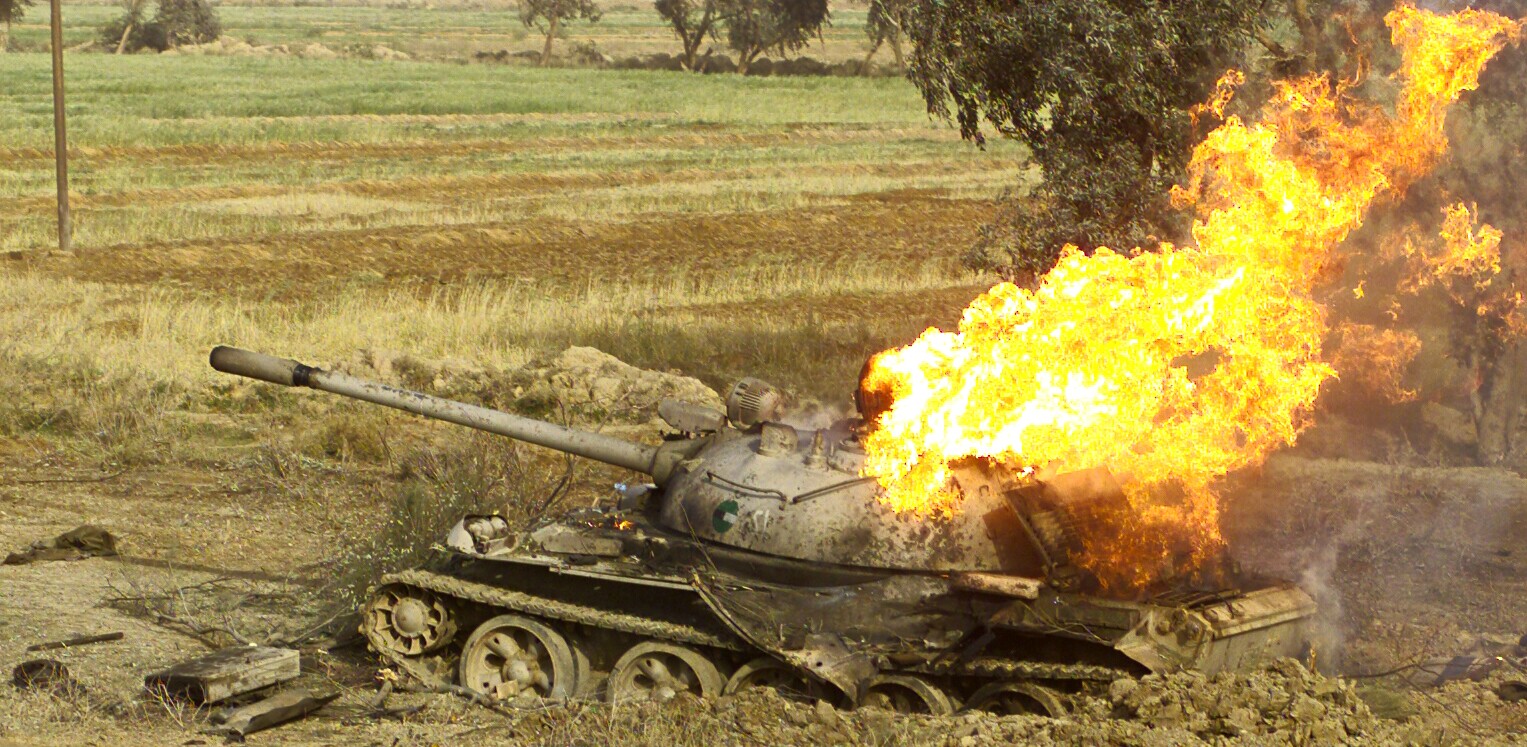
Under the clattering tracks of your monster tanks
Their barrels like bars across the prisoning sky.

You can cut us down, under your bulldozer blades
As you cut down the orchards and break down the walls
You can make us bleed as easily
As you can make the children cry.

All that is in your power. Killing is what you do
Death is what you bring with you,
Skull-face leering over your shoulder,
Exulting.

Death, dressed in a business suit,
Death, dressed in uniform.
We have no defence against death.

Yes you can kill us a thousand times, in a thousand ways.
You can shoot us and bomb us, burn us and strangle us
You can erase all we know and loved
But you can’t destroy us.

No, because time is on our side
And though you crush us down
You, too will pass, and once more, we’ll rise.

You will consume yourself, in your fury
One day you will be gone,
And we’ll rise.

Like grass from the ground in spring, like clouds in the sky
Like the phoenix from the ashes
Once again, we’ll rise.

The earth will still go around the sun
When you’re gone
The world will still know sorrow and joy
When you’re gone
The moon will wax and wane, the tides will rise and fall
And we will arise, we will walk tall
After you’re gone.

There will be no tanks then, no guns no bombs
No drones flying up in the skies.

Just me, he, she, we together
From the funeral pyre of your ambitions
From the wreckage of your cruelty

Kill us, trample us down a hundred thousand times
Like laughter after sorrow, like today gives way to tomorrow
From your hate and your burning fire
Like a comet turning sunwards

Once more, we’ll rise.


Copyright B Purkayastha 2012

Sunday, 1 April 2012

The Devil's Bones


The Imam-Pope Rabbi Boniface XI Surajananda dropped into his chair with an audible sigh. He averted his eyes from the window, because he had no desire to see the sun shining on the dome of the Temple Mosque of the Cathedral of Saint Tenzing Gyatso. He’d just spent three hours in there, which was about three hours too much, and he felt as though he never wanted to see the Temple Mosque again.

Tugging on his long grey beard to make sure it was glued on securely, the Imam-Pope fumbled under his robe and brought out a hip flask. It was only whisky, and just cheap malt, but beggars couldn’t be choosers. Closing his eyes, he tipped the entire contents of the flask down his throat. It burned going down, but he was more than used to that.


Pressing a buzzer, he summoned his personal secretary. The nun was young and would have been very pretty but for the fact that her order compelled her to look as unattractive as possible, so she had painted reddish splotches on her cheeks, neglected to clean her teeth, and completely removed her eyebrows. In combination with her wimple, it made her look like nothing on earth.

“Yes, Your Holiness?” she asked formally, glancing quickly around the office to check for visitors. “You buzzed?”

“You know damn’ well I buzzed,” the Imam-Pope snapped. “What’s this emergency? Why did I get called back from the Friday Namaz and Mass?”

“The Commissar-Ambassador of the Red Horde wants an audience,” the nun said. “He said it couldn’t wait.”

“Everything can wait,” the Imam-Pope grumbled. “Whatever it is, it can wait. Is he even here?”

“Yes, he’s been sitting in the library for the past half hour, reading through the records of past fatwas.” The nun glanced conspiratorially over her shoulder and tiptoed into the room, giving the Imam-Pope an overpowering whiff of her unwashed body. “He seems to be in a right state, sir.”

“Wonder what it can be about,” the Imam-Pope said. “As far as I know, there haven’t been any recent incidents between the Red Horde and the Chrislamic Emirate. Did you hear anything?”

“Who, me?” the nun asked, aggrieved. “You know my order doesn’t allow any access to news sources, even though we agitated for it, and the appeal signed by our nuns and forwarded through the Mother Superior has been sitting on your desk for the last eighteen weeks, unsigned, and...”

“All right. I’ll get round to it, OK?” The Imam-Pope reached for his hip flask again, and then remembered he’d already emptied it. “I suppose you’d better show him in,” he said reluctantly.

The Commissar-Ambassador of the Red Horde answered to the name of Kim Bong-Chol. He was dressed in full uniform, the red star on his helmet shining, but he was obviously deeply worried. He did not even perform the ceremony of exchanging ritual insults.


“Your Holiness,” he said, in his bitten-off English, “we have a problem. That means, your side and mine – we both have the problem.”

“What problem, Commissar-Ambassador?” The Imam-Pope had offered the Red Horde representative a chair, but Kim Bong-Chol had ignored it, so he, too, had perforce to remain standing. The whisky had begun to work, and his knees felt a bit weak. “What’s the emergency?”

The Commissar-Ambassador leaned over the desk and put his mouth to the Imam-Pope’s ear.

“We’ve found the Devil's bones,” he said.

                                                       ***************************

The Commissar-Ambassador and the Imam-Pope sat side by side in the turret of an armoured personnel carrier, looking down the slope at the place where the soldiers and workmen were digging.

“You can see it’s right on the border,” the Commissar-Ambassador pointed out. “Our soldiers were digging a trench...just as an exercise, you understand, Your Holiness, there’s no truth to anything you may have heard about us preparing new fortifications, none at all. As I was saying, the soldiers were digging the trench, and they found that. And of course people on your side were watching as well.”

“Yes,” the Imam-Pope murmured. “I see.”

“It’s undoubtedly the Devil’s skeleton,” the Commissar-Ambassador continued, “and if you want to go down to the excavation, we can. Alternatively, you can take another look at these photographs –“

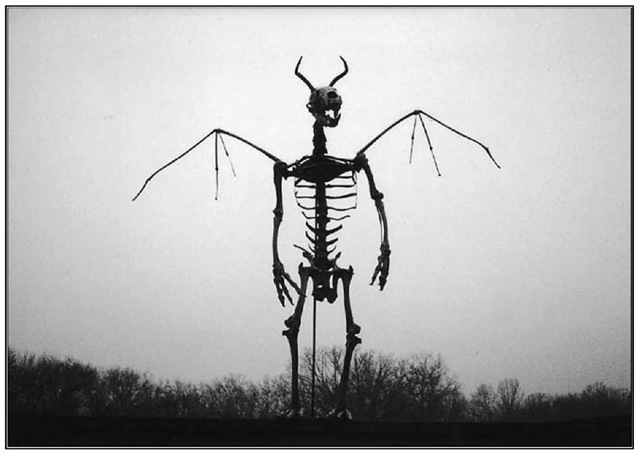
“No, no,” said the Imam-Pope, hurriedly waving away the pictures. The alcohol still lay sour in his stomach, and he had a growing conviction that he was going to throw up. “I’ve seen them already. I’ve seen enough.” He closed his eyes, imagining the gigantic skeleton with the curved horns, the sharp teeth, the struts of the wings and the goatlike hooves. “I really don’t think I can stand another look at it,” he said. "Thanks very much all the same."


“You realise the problem,” the Commissar-Ambassador said. He was sweating with anxiety. “If word of this gets out...for you, it’s a disaster, because the Devil is dead, and who will ever want to obey you again if they aren’t scared of the Dark One? And for us, it’s a disaster, because if the Devil existed, God might. Something has to be done.”

“I see that, of course,” said the Imam-Pope. “But what?”

“I have a solution,” said the Commissar-Ambassador. “But it requires a certain amount of ruthlessness.”

The Imam-Pope listened, frowning. At length he relaxed slightly, the knot in his stomach loosening.

“Go right ahead,” he said.

                                                           *****************************

The war between the Red Horde and the Chrislamic Emirate lasted only two days. It was a curious war, without any bombing of each other’s cities, or even an exchange of long range missiles. Only a couple of armoured divisions on each side were involved, and they only fought each other over a particular bit of the border, the tanks, self-propelled artillery and personnel carriers charging at each other and blasting away until the soil was as churned up and cratered as the surface of the moon. The fighting was savage, and the toll was high, but it only lasted two days. And after that there was peace.

It was almost, some people said, as if both sides had arranged the war to suit some hidden purpose, and when that was fulfilled, they quit.
               
But then conspiracy theorists will say anything, and nobody should ever listen to them.

Nothing they say has anything to do with the truth anyway.


Copyright B Purkayastha 2012

Friday, 30 March 2012

The Cruel Sea


Katja, Liebchen

I don’t know if, or when, you will get this letter; indeed, in my heart I know well that you will not get it at all. If I were to be sanguine, I might say that you will never need to receive it, because I will return to you, just as you saw me last; but I know that that is not something Herr Gott has planned for us. If there are good things that lie in our future, they are so far away that we cannot even imagine them now.

I remember that last time we were together, when you had visited me in the naval barracks at Kiel. We had been waiting impatiently for that day – the one day when they would allow visitors, before the ship left. Ah, you came all the way from Dresden, using up all the leave you had left; just for that one morning together.

How I remember the sun shining in your hair, and how the world seemed to light up when you smiled, the dreary old docks coming to life as a flower unfolds in spring. I remember the way you threw your arms around me, and how hard you kissed me right there in front of everyone, as though you would never stop.

I know what you’d be thinking if you could read this; “I know all this – why repeat it?” Why, indeed? Perhaps it’s because I need these memories, to play them over in my mind and remember how you were that day. It’s the last good thing that happened to me, after all, and the last good thing that might ever happen again.

Do you remember the day when we first met, at the door of old Siegfried Kramer’s shop on the Brennerstraße? I was going in as you were coming out, and the sight of you struck me almost dumb. I don’t have the slightest idea what I must have looked like. Maybe I grinned like a fool, slack-jawed, or blushed like a beetroot; I have no idea, and till today I’ve lacked the courage to ask you. I do remember though that I held the door open for you to pass, stepping aside and bowing like a Prussian, and I remember how you laughed, like silver bells tinkling. It’s the laugh I remember best of all.   

I remember how you laughed again, that day on the Kiel docks, when I gave you my spare uniform shirt and cap, and how, when you put them on, you ordered me to salute you and call you Fraülein Großadmiral. It must be true what they say, that all the world loves lovers, because my comrades, hard-swearing and foul-mouthed as they are to a man, had laughed too, joyously and not with their affected sarcasm. Why, even old Petty Officer Starkmann, the terror of the engine room, had turned the corners of his lips briefly upwards; it was the first time anyone had ever seen him smile. And then we’d walked along the docks, far enough that you could look up and see the ship, towering above the tugs and the motor launches as an elephant towers over ants; and I remember the awe in your eyes.

Yes, Liebchen. Though I teased you about it then, I can understand that awe. She’s a beautiful ship, a wonderful ship, even in her present sadly wounded state; and, even now, and no matter what happens tomorrow, I am proud to be a member of Division Eleven of her crew.

I had reacted in awe myself, when I’d first seen her, sitting by the wharf in Hamburg while the instrument fitters and electricians, the mechanics and carpenters, had still been swarming over her. I’d been awed and overwhelmed at her sheer presence; even at that moment, only half-completed, she was already a queen of the sea. Whatever happens to her tomorrow will not change that one little bit.

Here, deep inside her bowels, we are under the waterline. The sea meets the air somewhere far above my head, and I remember how you’d said, only half joking, that you were glad I wasn’t in a U-Boat, because you’d be worried about me, under the water. I’m under the water now, but I didn’t tell you that. I hadn’t wanted you to worry.

I wish I could have taken you on board her, to walk the decks beside me, and pause in the shadow of the great guns, the very reason for her existence. I wish I could have done that. Instead, I watched as the Führer himself took those steps at the side of the Admiral and the Captain, when he toured the ship; and we had been drawn up in lines to greet him. I remember how his grey eyes had flicked across my face and onwards as he passed by, looking strangely ill at ease; and I’d recalled all the talk below decks, that the Führer actually fears and hates the sea.

Certainly the company of the ship has no reason to love him now, for all that the Admiral sends him radio messages promising fealty. We owe him nothing; we don’t fight for him. But then we never did; there are no political people here in the engine room. Nor do we fight for the country, because so far from home, with only the ocean below and the sky above, Deutschland is an abstract concept, like the gulfs of infinity between the stars. I wish, though, that I could say we fight for those whom we left at home, for old Starkmann’s daughters, who are still at school; for Koller’s wife, who is always ill; for you, my love. I wish I could say that, but it would not be true. We fight, quite simply, for the ship, because she is our home, and our world. She is a wonderful ship, and deserves better than the fate that lies in store for her.

The battles we fought have not been like the stories the papers tell, of glorious death rides against the flashing guns of enemy fleets, of glorious victories against terrible odds. Modern battles are not like that; the enemy is so far away that even the men on the bridge can barely see him, and all we, so far below the water, know of the battle is when we can hear the report of the great guns and feel the ship tremble from their recoil. War for us is not a glamorous business, if it is for anyone; our job is to keep the engines going, and try not to think too much. While the men in the turrets and on the bridge carry out the business of killing, all we can do is tend the motors and wait to die.

That death is, I fear, not far off; yesterday, the ship was torpedoed and crippled, the port rudder jammed. All we can do now is steer in a great circle in the middle of the ocean, and our enemies will be closing in. They will be aching for revenge, and will give no quarter. Nor do we expect it.

We have already made our decision – when the time comes for the final battle, the ship will fight on until she can fight no longer, poor beautiful doomed lady; and then we shall scuttle her, open the valves in her engine room and let the water in. She will not be surrendered, to become a prize. And if she should be sunk, it is only right that it would be us, who have loved her and lived in her, who will send her to her rest, not the shells and torpedoes of the enemy.

And what about afterwards? What shall we do? Well, what shall happen will happen. I can say no more.

I think of the day we had gone for a walk in the woods near the old city, and you had found the acorn with a shoot germinating from it; and you took that acorn home, and planted it in a little flower tub on your balcony. As long as it had air and sunshine, you said, let it grow – it represented life and hope in the middle of a war which only promised horror and death.

Take care of that acorn now, Katja. Take care of it well. And if you should have the chance, take it to the woods and plant it there, in its own free soil. And, in the coming years, go to it sometimes, and look up at its branches spread out across the sky, and think of me.

I will seal this letter now, wrap it in oilskin and keep it next to my skin, near my heart. And maybe this time tomorrow I shall be able to joyfully anticipate coming home to you. Or maybe, like the great ship herself, I will be sleeping far away and deep. But that, only the coming hours can tell. Maybe someday I can go to our oak with you, and look up into its branches. I would like to think so.

With all my love,

                                                                                            Yours forever,
                                                                                                  Helmut.

Note: On the morning of 27th May 1941, having earlier destroyed the battlecruiser Hood and then being crippled by torpedoes which jammed her rudder, the battleship Bismarck was scuttled by her crew after an epic battle against several British battleships and cruisers. Only 114 of her crew of over 2200 were saved.


Copyright B Purkayastha 2012